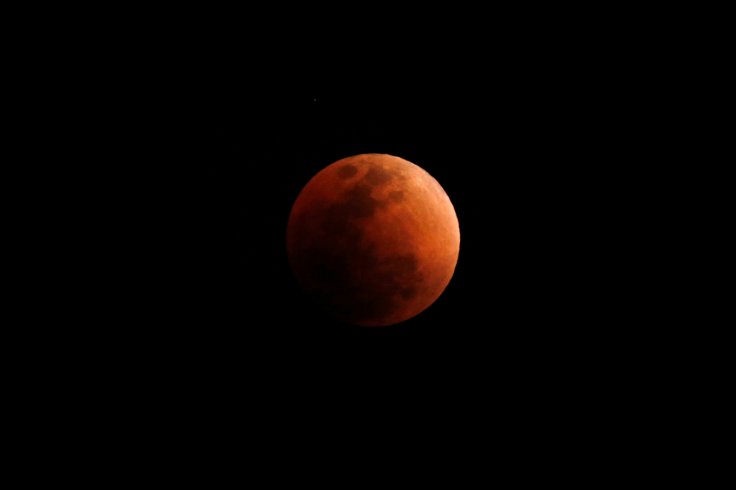
A striking red moon is set to rise over Singapore on March 3 as a total lunar eclipse unfolds, marking a rare celestial event that will be visible to the naked eye, weather permitting.
The Observatory at Science Centre Singapore said on February 6 that the phenomenon will occur when the Moon passes completely into the Earth's umbra, or innermost shadow.
During this phase, the Moon will appear red or orange as the Earth's atmosphere filters out shorter wavelengths of light, allowing warmer hues to reach the lunar surface. The event coincides with the 15th day of Chinese New Year and will be the last total lunar eclipse visible anywhere in the world until December 31, 2028.
The eclipse is expected to begin at moonrise around 7.15 pm and will last until about 9.17 pm, when the partial phase ends.
According to Science Centre Singapore, the best viewing window locally will be from 7.47 pm onwards, when the Moon rises higher above the horizon. From Singapore, observers are likely to see the Moon during its maximum eclipse or as it gradually emerges from Earth's shadow.
To mark the occasion, Science Centre Singapore will host a special public viewing event featuring expert-guided telescope sessions, planetarium shows explaining the science behind lunar eclipses, and family-friendly activities.
Entry to the event is free on a first-come, first-served basis. Members of the public can pre-register from February 20, while on-site registration will also be available from 6 pm on March 3 at the centre's main entrance.
Fifteen telescopes offering 30-times magnification will be available initially, with more set up progressively as the Moon rises. Telescope viewing will also be on a first-come, first-served basis, and only equipment provided by the Science Centre may be used during the session for safety and logistical reasons.
Live screens will be placed along queue lines to project the eclipse with commentary from astronomy educators. Those unable to attend in person can tune in to a livestream on the Science Centre's YouTube channel.
A special bundle priced at S$4 per person will also be offered, which includes telescope viewing and a live planetarium show at the Omni-Theatre, scheduled at selected times throughout the evening.
Beyond the eclipse, sky-watchers can look forward to spotting bright constellations such as Taurus, Orion, Canis Major and Gemini. Jupiter will be visible until late evening, while Saturn can be seen in the western sky until around midnight.
The Science Centre advised observers to seek darker locations with a clear view of the eastern horizon and to check weather forecasts, as cloud cover may affect visibility. While the eclipse can be seen with the naked eye, binoculars or telescopes can enhance the experience.
Total lunar eclipses typically occur once every three to four years, and the phases visible vary by location. On March 3, Singaporeans can expect the rare sight of a red moon rising and gradually brightening as it moves out of Earth's shadow.


