The Trump administration has kicked off its own version of a "Manhattan Project" following reports that one of the country's biggest companies may be taken over by the government. Intel, the largest semiconductor fabricator in the U.S., has been in discussions with Donald Trump regarding a possible government ownership stake.
Although the exact share being sought by Intel has not yet been disclosed, government takeovers of private companies are generally considered a measure of last resort during times of crisis. During the 2008 financial meltdown, the U.S. government took control of several banks, and in World War II it took control of several major logistics companies across the United States.
Trump's Big New Project

The latest move stems from concerns that the U.S. is overly dependent on TSMC, a Taiwan-based chipmaker, even as China continues to issue threats of invading the island. Such an invasion could cripple America's ability to compete in the rapidly expanding semiconductor market, especially as demand soars due to artificial intelligence.
Although Intel's AI chips lag behind those produced by NVIDIA and AMD, the company holds a strategic advantage because it both designs and manufactures its own products.
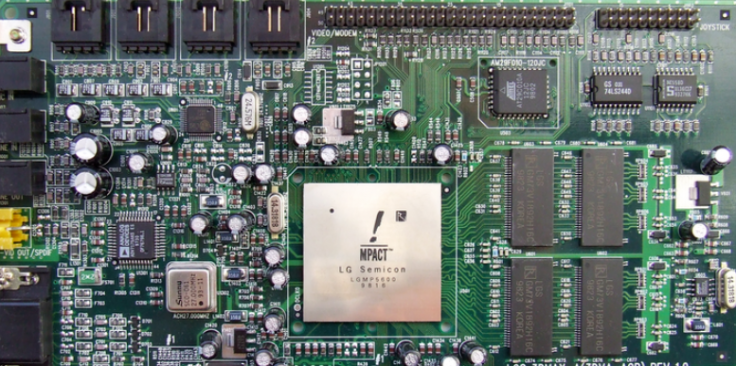
Trump's plan is aimed at strengthening national security by bringing chip production back to U.S. soil.
"This feels like the Manhattan Project - or the run-up to World War II," MIT AI computer scientist Dave Blundin said. "It's every bit as important as the space race was, as the nuclear arms race was. Actually, it's more important."
Intel's cutting-edge semiconductor manufacturing capabilities could help the U.S. reduce its dependence on overseas chip factories—particularly those in Taiwan, which controls over 60 percent of the global market—while supporting artificial intelligence, national defense, and the broader economy.
Negotiations are still underway, with details continuing to take shape. According to a source cited by Bloomberg, the plan would involve the U.S. government purchasing a stake in the company.
However, another insider stressed that these discussions are not guaranteed to result in an agreement and could end without a deal.
Tech and AI specialists speaking on Diamandis' Moonshots podcast compared the initiative to a modern-day "Manhattan Project," describing it as a kind of "national survival strategy." "The reason the US needs to protect Taiwan fundamentally... is because the fabs are there. If the fabs all move to the US, then why would the US defend Taiwan?" Blundin said.
Concerns Grow Over Nationalization
Some have voiced concerns over the move to nationalize the company, with one observer noting: "They're putting the whole industry on a kind of war footing, like mobilization for conflict, except the battleground is supply chains and chip fabs."

In a statement to Bloomberg, Intel declined to address its talks with the Trump administration but said it remains "deeply committed to supporting President Trump's efforts to strengthen US technology and manufacturing leadership."
"We look forward to continuing our work with the Trump administration to advance these shared priorities, but we are not going to comment on rumors or speculation," the company added.
The move comes after two AI firms agreed last week to give 15 percent of their chip sales revenue from China to the U.S. government in return for export permits.
According to three people with knowledge of the matter, NVIDIA and Advanced Micro Devices (AMD) struck this first-of-its-kind agreement with the White House to market and distribute their semiconductors in China.
The agreement could generate over $2 billion for the U.S. government, though Trump has not specified how those funds would be allocated, according to the New York Times.


