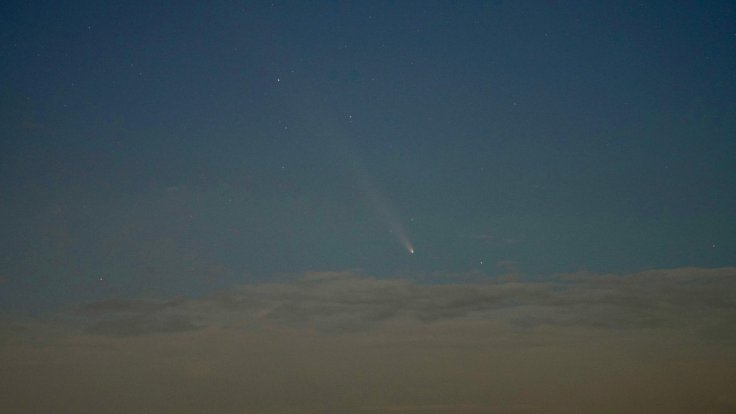
A new comet, C/2025 R2 (SWAN), was discovered by an amateur using NASA SOHO spacecraft data in mid-September 2025.
By the end of September, it was visible via the field glasses, and it was rapidly becoming brighter as it turned the Sun.
With the aid of dark skies, the visitor may be visible to the unaided eye on October 20–21 as it will travel into the Earth's -3 degree zone at a height of less than 0.27 astronomical units above the surface. To see the western horizon at dusk, observers must keep their eye on it.
NASA stated that SWAN has already become bright enough to see with the naked eye. Its ice is melted by the Sun's heat, producing a brilliant coma and tail. Telescopes have been used to observe SWAN's greenish gas tail.
On October 21, it will travel roughly 40 million kilometers (or 0.27 AU) past Earth. Sharp-eyed individuals could see the comet during closest approach under extremely dark skies, although binoculars or a small telescope would significantly improve the view.
After sunset, SWAN will show up "near the western horizon." It is in Aquarius toward the end of October after spending the first part of the month in Libra, close to Alpha Librae (Zubenelgenubi). The ideal days to watch are October 20 and 21, as these are the days when it is closest to Earth (around 40 million kilometers).
Using binoculars will be beneficial because the comet can develop up to about magnitude +5, which is just visible to the naked eye in gloomy skies with the right telescopes. In October end, it will glide northward from the southern sky.


