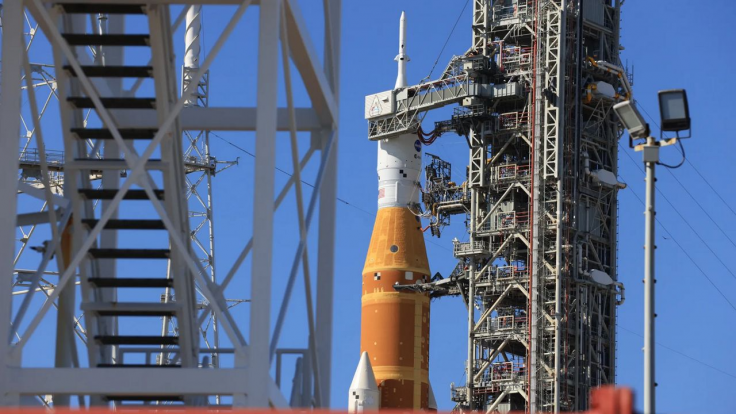
- NASA ended Artemis II rehearsal at T-29 seconds Thursday.
- Test conducted at Kennedy Space Center, Launch Complex 39B.
- Countdown recycled after booster avionics voltage anomaly.
- Core stage loaded with liquid hydrogen and oxygen.
At 10:16 p.m. EST on Thursday, NASA terminated the Artemis II wet dress rehearsal after the countdown reached T-29 seconds as scheduled after the two terminal count runs at Kennedy Space Center in Florida.
The full-size trial was an important step before the first crewed vessel under NASA Artemis action, Artemis II, orchestrated a venture to send people around the Moon in the Orion spacecraft visit by means of the Space Launch System (SLS) rocket.
The NASA announced the media briefing to face the result of the rehearsal at 11 a.m. Friday. On NASA website, there is a live stream of the rocket in Launch Complex 39B, which is continuously running.
Countdown Recycle and Countdown Terminal.
Thursday test was the last phase of the tests and involved getting practised on the procedures related to the terminal count - last ten minutes of a launch sequence where the countdown becomes automated and the rocket becomes internal.
The countdown was to resume only after NASA teams wrote off a scheduled terminal count run and was at T-33 seconds at the termination of the first run. Engineers again re-tenanted the clock to T-10 minutes to repeat the second practice sequence and eventually stopped at T-29 seconds in the final run.
Earlier on in the evening, a short pause was experienced in the terminal countdown because of a booster avionics-voltage anomaly. The count was later checked up and verified by NASA to restart and was verified to the scheduled point of recycle without any further complication.
In terminal count, the engineers check flight computers, engine bleed, ground support equipment and power transitions. Possible scrub scenarios were also simulated during the rehearsal and the teams were able to practice how to safeguard the vehicle and how to refuel the cryogenic propellants.
The process of the recycle that required about 60 to 90 minutes involved reconfiguration of liquid hydrogen and liquid oxygen facilities so that the rocket could be put into launching condition once again in case it became necessary.
Fueling Operations at Milestones and Pad
The start of propellant loading operations took place earlier in the day as Artemis launch director issued the command to tank at around 9:27 a.m. that the core stage had gone through slow fill stage, followed by fast fill stage, and then replenish stage, as well as the interim cryogenic propulsion stage.
The tanks of the rocket were loaded with liquid hydrogen chilled to minus 423 degrees Fahrenheit and liquid oxygen which was chilled to minus 297. With the main capacity of less than 700,000 gallons of cryogenic propellant, the core stage worked into the replenish mode without hitting the safety limit of hydrogen leaks, a major achievement after the initial testing meeting a number of issues.
There were also chilldowns performed by the engineers of thermal conditioning propellant lines and RS-25 engines to reduce thermal stress during fueling. After fast fill was terminated, replenish operations kept the tank levels at constant levels by replenishing propellant lost to natural boil-off.
The middle of the day operations involved troubleshooting temporary ground communications at the firing room. Teams resorted to backup communication systems whilst continuing liquid oxygen fast fill prior to the recovery of normal communications and continuing with loading of hydrogen.
Afterward, the closeout crew entered the White Room through the crew access arm to simulate closing-day operations. They closed and fastened the hatch of the Orion crew module, checked the environment controls and leak inspection. Launch abort system hatch was also shut and the crew access arm was also retracted premature of terminal count.
Pad rescue team had been put on hold during fueling and countdown operations to provide emergency response.
Simulating the Conditions of Launch Day.
Wet dress rehearsal is a procedure that aims at simulating the conditions of the launch day but without the liftoff. A simulated opening of a launch window was set by NASA at 8:30 p.m., lasting a first terminal count run at T-33 seconds and then a recycling made the second run.
Tests at automated systems at this stage did final checks during a simulated engine start sequence. The emergency would have attracted astronauts to launch five minutes and 25 seconds by the launch abort system, which would have responded.
Even though there was no crew involved in the rehearsal on Thursday, the Artemis II validation procedures were passed by simulating the practice of placing astronauts in their seats.
All through the day, NASA conducted gaseous nitrogen cleanses to flume areas of the rocket and mobile launcher to minimize the danger of fire and to safeguard malleable systems before and during fueling.
Also Read: Probe Report: NASA Classifies Starliner Crew Flight Test as Type A Mishap
Fueling, replenishment operations and double terminal count run are successful which offers the engineers data required to improve the processes before the Artemis II mission. According to the officials of NASA, the media briefing scheduled for Friday will contain more analysis of Friday rehearsal performance and will lay down the way forward toward launch preparedness.
Recommended FAQs:
Why did NASA stop the Artemis II rehearsal at T-29 seconds?
NASA ended the wet dress rehearsal at T-29 seconds as planned after completing two terminal countdown runs. The test was designed to simulate launch procedures without liftoff.
What is a wet dress rehearsal?
A wet dress rehearsal simulates launch day operations, including fueling the rocket with cryogenic propellants and running the countdown sequence. It allows engineers to test systems and procedures without launching.
Were there any issues during the Artemis II countdown test?
Teams briefly paused the countdown due to a booster avionics voltage anomaly. The issue was verified, and the countdown resumed to the scheduled recycle point without further complications.
How much propellant was loaded into the Artemis II rocket?
The core stage was loaded with nearly 700,000 gallons of liquid hydrogen and liquid oxygen. The propellants were chilled to extremely low temperatures to prepare the rocket for launch conditions.
When is the Artemis II mission expected to launch?
NASA has not announced a specific launch date following the rehearsal. Officials said further analysis of the test data will help determine the next steps toward launch readiness.


