Japan's national debate on nuclear energy often centers on three essential questions: Which reactors will restart? How much nuclear capacity does the country ultimately need? And how can public trust remain central to long-term planning?
One important aspect of this discussion is often overlooked: the security and predictability of nuclear fuel supply. Reactors may occupy the headlines, but their operation depends on a stable upstream foundation. Without reliable access to fuel, nuclear power cannot reliably support the energy system.
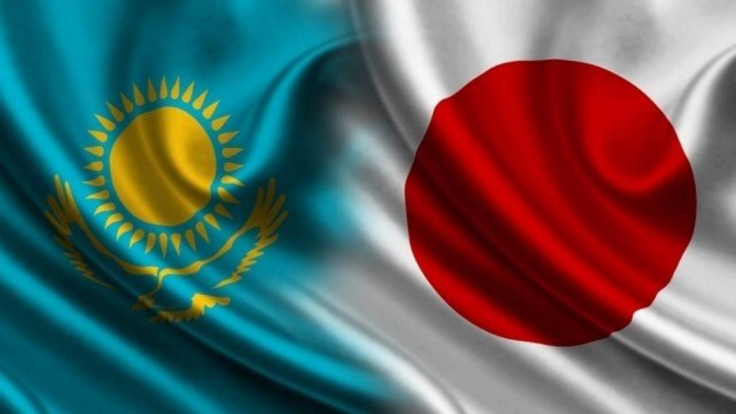
Kazakhstan has been one of Japan's most reliable partners in this regard. As the world's largest producer of natural uranium, Kazatomprom has worked closely with leading Japanese energy companies and trading houses for nearly two decades. This relationship has enhanced Japan's long-term energy security and reflects shared values of stability, professionalism, and mutual trust.
Our cooperation began when Sumitomo Corporation, Kansai Electric Power, and Marubeni Corporation partnered with Kazatomprom to develop major uranium deposits in southern Kazakhstan. Their involvement reflected a clear strategic vision: for a resource-importing nation, energy security must be built on reliable, long-term partnerships in stable jurisdictions. That logic is even more relevant today, amidst rising geopolitical tensions and supply chain disruptions.
Kazakhstan accounts for approximately 40 percent of global uranium production, with Kazatomprom at the center of this success and widely recognized for its disciplined, transparent, and market-oriented strategy. We operate through joint ventures with a diverse set of international partners which ensures risk-sharing, operational excellence, and adherence to global best practices. Kazakhstan's partnership model has helped make our company a cornerstone of stability in the global uranium market.
A central pillar of Kazatomprom's approach is in-situ recovery (ISR), the most environmentally responsible method of uranium extraction at scale. ISR minimizes land disturbance, preserves local ecosystems, and significantly reduces carbon intensity compared to conventional mining. These attributes align strongly with Japan's high standards of environmental stewardship and corporate responsibility.
Today's energy security challenges extend far beyond production. Global supply chains face increasing unpredictability, and geopolitical tensions are reshaping trade flows. For countries reliant on imports, even small disruptions can have enormous impacts. Despite these challenges, nuclear energy remains one of the most reliable sources of low-carbon baseload generation. And confidence in uranium supply is essential to sustaining it.
Kazakhstan provides something increasingly important: a stable and predictable environment for long-term planning. Kazatomprom operates under transparent commercial principles and maintains a long-term approach to production planning. This gives utilities the certainty they need to plan decades ahead – a critical requirement for reactor operators and regulators.
Kazakhstan is also entering a new chapter in its own nuclear story. Following a public referendum in 2024, the country is preparing to introduce nuclear power into its domestic energy mix. This development underscores the importance of establishing a strong safety culture as the country develops its nuclear program.
At the same time, the global nuclear sector is evolving rapidly. Small modular reactors (SMRs), digital monitoring systems, advanced fuels, and next-generation safety technologies are shaping the future landscape. Here again, Japan's engineering capability and Kazakhstan's resource base create a natural complementarity. There is considerable potential for collaboration not only across the uranium supply chain but also in emerging innovation and science-related areas.
Beyond power generation, new avenues of cooperation are already developing. Kazatomprom is working with international partners, including Sumitomo Corporation, to explore technologies for producing medical isotopes a field with far-reaching societal benefits. This effort builds on Kazakhstan's long experience in nuclear sciences and Japan's leadership in healthcare innovation. It demonstrates that nuclear cooperation is not confined to energy alone; it can also improve quality of life, support medical infrastructure, and expand scientific exchange.
As Japan prepares to host the Japan-Central Asia Summit this month, the broader context of our relationship comes into sharper focus. For decades, Japan has been a trusted and thoughtful partner to Kazakhstan not only in the nuclear sector but across trade, investment, and technology. This year presents an opportunity to further deepen that relationship and identify new areas for collaboration.
What has made our partnership successful is simple yet powerful: trust, transparency, and a shared commitment to responsible development. These values have helped Japan and Kazakhstan build one of the most stable and resilient supply relationships in the global nuclear industry.
The next chapter should be built on this foundation. Whether through potential future supply agreements, collaborative research on advanced technologies, or deeper dialogue between our energy sectors, our two countries can help ensure that nuclear power remains a reliable pillar of energy security. There remains enormous potential, with several avenues for cooperation that could serve the best interests of both nations.
In an unpredictable world, partnerships rooted in stability and mutual respect are not just advantageous they are essential. The cooperation between Japan and Kazakhstan demonstrates that such partnerships can endure, adapt, and continue to serve both nations in the decades to come.
Meirzhan Yussupov is the CEO of Kazatomprom
Disclaimer: IBT does not endorse the above content.