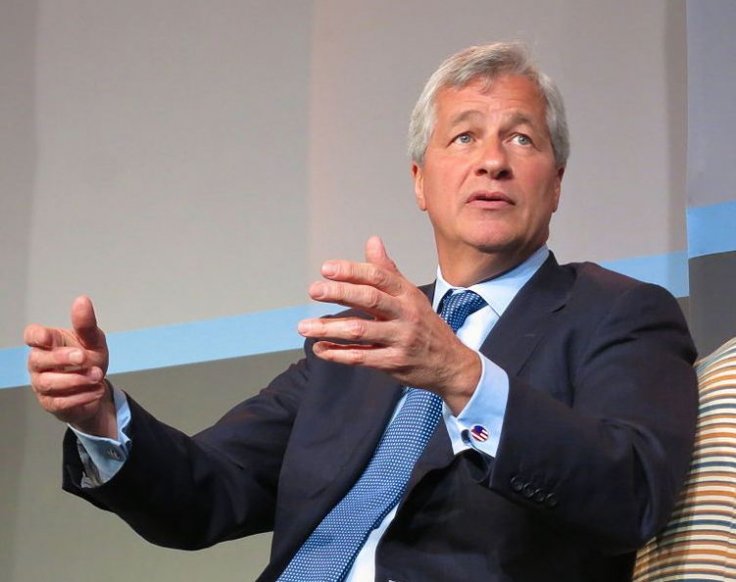
JPMorgan Chase CEO Jamie Dimon has warned that current market conditions are beginning to resemble the years leading up to the 2008 financial crisis, when easy credit, rising leverage and inflated asset prices masked deeper vulnerabilities. Speaking in a TV channel interview on Monday, Dimon pointed to a familiar "rising tide lifting all boats" mindset, cautioning that isolated "dumb things" in the market often signal broader trouble ahead.
Making it more striking, he used a past analogy: "When you see one cockroach, there's probably more," implying that some isolated issues could signal broader problems. His warning revisits Dimon's pre-crisis shareholder letters, where he repeatedly flagged similar risks in credit cycles, subprime lending, and overleveraging.
In his 2006 shareholder letter, written at a time of unusually benign credit conditions, Dimon struck a notably cautious tone. The U.S. economy then appeared strong, housing prices had risen 135% from 1995–2005, and credit losses sat near historic lows. He warned that in a tougher environment, including a recession or market turmoil, credit losses could rise by as much as $5 billion, thus forcing JPMorgan to build reserves and significantly pressure earnings. "We do not know exactly what will occur or when, but we do know that bad things happen," he wrote in his 2007 newsletter.
What Dimon Said During 2008 Subprime Crisis
Dimon did praise subprime lending for expanding homeownership but certainly flagged "industry excesses and mismanagement," especially high loan-to-value ratios and lax verification. "The subprime business is a great example of what happens when something good... is taken in excess," he noted, foreseeing tighter standards reducing sales and eroding prices.
While many competitors continued chasing volume in late 2006, JPMorgan sold most of its subprime originations, restricted underwriting six times avoiding adjustable-rate mortgages (ARMs) as an option because of its inherent risk, and maintained what Dimon described as a "fortress balance sheet," supported by Tier 1 capital of 8.7% and reserves of 1.7%.
He was positive on the prospects of JPMorgan (forecast earnings of $13.6 billion) but expressed risk when the market turbulence started picking up in mid-2007 as a result of the bursting of the housing bubble. Home values had fallen by almost 10 percent across the nation since late 2006.
When the crisis unfolded in 2007, Dimon went ahead to warn that the U.S. economy could face a "severe economic downturn." He confessed later that he underestimated the severity of the 2008 bubble when the subprime meltdown was at its peak.
Similarities Today As Dimon Warns Again
The current warning by Dimon refers to high leverage, hyper-optimism, and "dumb things" in private credit in the wake of Artificial Intelligence hype echoing his previous warnings in 2006 and growing to the recognition of crisis in his seven-point letter of 2007. Subprime rot had initially been covered up by overconfidence; now, frothy market conditions have reappeared.
His record gives him the benefit of the doubt; JPMorgan avoided SIVs, cut subprime early and bought Bear Stearns and Washington mortgage. Though there are distinctions between the pre-2008 emphasis on mortgage risk and the recent wider technology bubbles and tensions between countries and continents, the trend in the tone of the warning given by Dimon to shift the model of narrow-focused credit remains relevant. JPMorgan's own estimate of a net interest income of $104.5 billion by 2026 has drawn attention amid leverage in AI-linked sectors.
Dimon's consistency over multiple cycles has earned him a reputation as one of Wall Street's most closely watched voices. As he signals plans to remain CEO for several more years despite a recent hand surgery, his warnings serve less as hindsight and more as a reminder that complacency precedes market shocks.