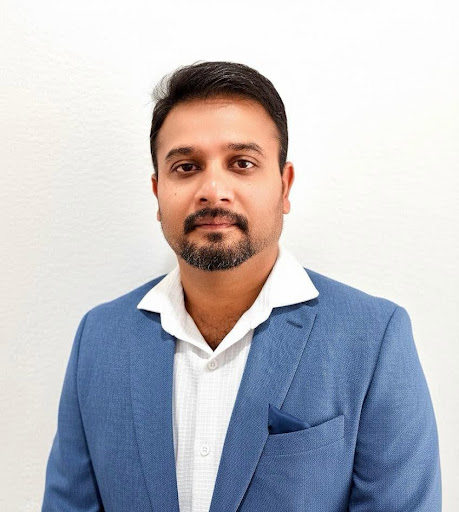
Enterprises are rapidly shifting toward hybrid Oracle environments, but the transition is proving more complex than many expected. Performance bottlenecks, runaway cloud costs, and fragile failover systems are becoming common across industries. Yet many organizations struggle to realize these benefits due to inconsistent operational practices, insufficient AI governance, and poorly aligned workload strategies which is the root causes behind the growing failure rate of hybrid Oracle initiatives and highlights the critical factors required for sustainable success. Drawing from real-world operational patterns, Ranjith Rajasekharan identifies three foundational gaps:
- lack of operational discipline in areas such as patching, capacity planning, schema hygiene, and cross-environment observability;
- inadequate AI oversight, leading to model drift, ungoverned automation, and unreliable performance tuning; and
- misaligned workload placement strategies that fail to account for latency profiles, licensing constraints, data-gravity considerations, and cost-to-performance trade-offs.
Few have observed this evolution as closely as Ranjith Rajasekharan, whose 18-year career spans banking, telecom, healthcare, high-availability technology services with expertise in PostgreSQL, Oracle, MSSQL, Cassandra, Redis, Azure and AWS cloud platforms.
"Research shows what's possible," he says. "Engineering is about turning possibility into something dependable."
The Real Strain Behind Hybrid Systems
While industry studies highlight diagrams and cloud frameworks, Ranjith Rajasekharan focuses on tangible pain points: slow claims portals, latency spikes, overnight jobs overrunning, and unexpectedly high cloud bills.
"People describe problems in user language, not architecture language," he says. "They talk about outages and broken workflows, not replication lags."
These operational friction points become increasingly visible as organizations distribute Oracle workloads across on-prem, multicloud, and containerized deployments, often at high cost.
Fundamentals Over Hype
Rather than relying on abstract frameworks, Rajasekharan emphasizes engineering practices that consistently work: sharding for predictable scaling, GoldenGate and Data Guard for reliable data movement, containerization for deployment consistency, and automation to reduce human error.
"These aren't futuristic ideas," he notes. "They're what make systems behave the same way on Monday morning as they did on Friday night."
He cautions that cloud elasticity alone cannot compensate for undisciplined design. "Cloud is powerful, but it won't fix fundamental architectural flaws."
Legacy Migration and High-Performance Platforms
At Cognizant, Rajasekharan led a major migration of legacy databases to a high-throughput Oracle platform. The challenge went beyond theory.
"We designed advanced partitioning logic, automated most migration steps, and mapped workloads to ensure predictable cutovers," he recalls. "It wasn't about sharding the data; it was about designing the right keys, planning precisely, and automating rigorously."
The results, higher throughput, near-zero defects, and a reusable blueprint, became a model for multiple teams.
AI With Governance
AI-driven orchestration is a growing trend in Oracle research, but Rajasekharan approaches it pragmatically. His AI framework profiles workloads, predicts traffic spikes, adjusts resources in near-real time, and prevents a performance incident before users notice.
"Intelligence only matters when it's controlled," he stresses. Model testing, rollback plans, and audit trails ensure AI enhances operations without introducing risk.
Lessons from Healthcare, Banking, and Telecom
Healthcare shaped Ranjith Rajasekharan's approach to reliability. Systems supporting U.S. health plans require precision and auditability. "We built environments with data in multiple locations, on-prem estates, cloud replicas, and encrypted pathways," he says. "You build for the patient, not the platform."
Earlier work in banking and telecom instilled high-integrity principles: strict failover discipline, predictable transaction flows, and rigorous operational standards. "Modern hybrid systems follow the same fundamentals, just with more automation and cloud," he notes.
Smarter Workload Placement
Instead of chasing cloud cost optimization alone, Rajasekharan prioritizes understanding where workloads belong. "There's no universal pattern," he explains. "Profiling and automation show what stays on-prem and what moves to the cloud. That leads to sustainable savings, not short-term reductions." Ranjith Rajasekharan highlights that smarter workload placement is the missing discipline in hybrid strategies, enabling organizations to align workloads with their ideal execution environment on-premises, cloud, or engineered systems like Exadata while optimizing for cost, speed, and reliability.
"The right workload in the wrong environment is worse than no workload at all. Smarter placement isn't optional it's essential for hybrid systems to succeed," says Ranjith Rajasekharan.
Preparing for the Next Wave
Looking forward, he sees trends in distributed resilience, edge-based replication, and quantum-safe security. Yet his focus remains practical: usable roadmaps, standardized templates, automated testing, and cross-cloud runbooks. Vision matters, but standardization prevents operational fires.
Engineering for Longevity
"Studies point us in the right direction," he concludes. "Real value comes from turning those ideas into systems that keep working when nobody's watching."
With hands-on leadership in cloud, Exadata, hybrid deployments, and AI-driven automation across high-stakes industries, Ranjith Rajasekharan's approach is clear: build Oracle systems that are practical, secure, and self-healing. Prioritize operational discipline over hype, and let real-world engineering guide long-term success. Longevity in hybrid systems is achieved through disciplined operational practices, transparent AI-driven automation, and strategic workload placement.
In a complex, rapidly evolving enterprise landscape, his career demonstrates that trustworthy systems are created not by novelty, but by disciplined execution.


