In one of the world's most isolated and unexplored regions, beneath the icy waters of the western Weddell Sea in Antarctica, a remarkable world has emerged. Scientists have discovered a network of fish nests—thousands of circular hollows carved into the seafloor—arranged in "sweeping, deliberate patterns" beneath an ice shelf that was once 200 meters thick.
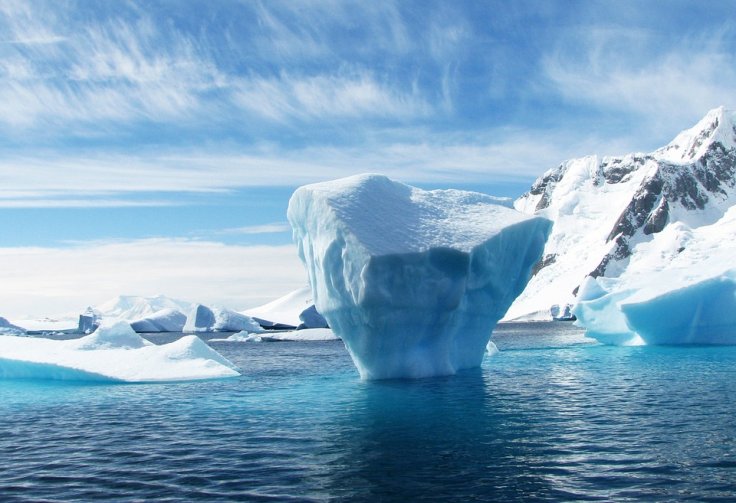
The A68 iceberg, a 5,800-square-kilometer slab of ice, broke away from the Larsen C Ice Shelf in 2017, providing a unique window into a region of the ocean that had not been seen in millennia, which allowed for the discovery.
More than a thousand circular nests were visible through the cameras of a remotely operated vehicle (ROV) that was flying over the bare seabed. Scientists noted that these nests weren't "simply scattered," but rather "formed shapes; arcs, clusters, solitary circles, as if the fish had mapped out a neighborhood of their own."
Each nest was notably "cleared of plankton detritus that covered the surrounded areas," creating a "vast, geometric fish neighborhood" on the seafloor.
The discovery was made during the 2019 Weddell Sea Expedition, which was started with the dual goals of finding Sir Ernest Shackleton's lost ship Endurance, which sank more than a century ago, and researching the shifting environment surrounding the Larsen C Ice Shelf.
Even though the crew of the South African research vessel SA Agulhas II was unable to find the Endurance's wreck during that specific voyage, the experience was crucial in determining the success of the subsequent Endurance22 expedition, which discovered Shackleton's ship remarkably intact at 3,008 meters. This was approximately three years later in 2022.
The yellowfin noties, a tiny, resilient species of rock cod, have been credited with creating these incredible Antarctic structures. According to scientists, a parent fish would have been watching over its eggs in each nest that was found.
The study, published in Frontiers in Marine Science, claims that the dense clusters seem to represent a "finely tuned survival strategy" and a blatant illustration of the "selfish herd" theory, which holds that solitary nests on the periphery are believed to belong to stronger individuals better able to defend their territory, while fish in the center are protected from predators by their neighbors.
The Vulnerable Marine Ecosystem (VME), a delicate habitat essential to Antarctic biodiversity, is also visible in the nesting grounds. The discovery adds to previous studies, such as the extensive breeding colony—one of the biggest known on Earth—described by Purser et al. in 2022.
In addition to preserving the famous penguins and seals, protecting this region also means preserving these secret nurseries that are an integral part of the Antarctic food chain. These underwater settings serve as a potent reminder that life manages to create intricate, robust communities even in the most extreme conditions on Earth.


