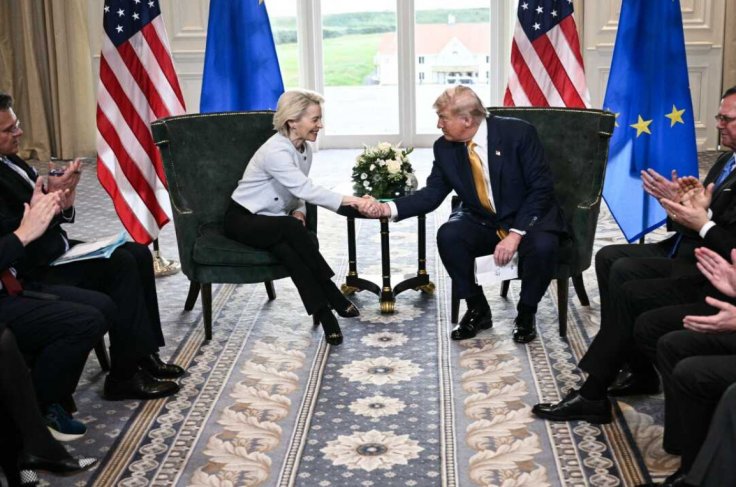
- European Commission demands U.S. honor existing trade deal terms
- Supreme Court struck down Trump's global tariffs Friday
- Trump imposed temporary tariffs, raising rate to 15%
- EU warns new tariffs could undermine agreed exemptions
The EU has ruled out accepting any rise in American tariffs above last year's agreed limits, following a Supreme Court decision that dismantled Donald Trump's broad-based tariff system, prompting Washington to impose new sweeping import taxes.
Brussels pressed for answers after the U.S. court ruling, stressing that going beyond past agreements could shake long-standing trade ties across the Atlantic. The statement arrived with more urgency than seen just days earlier when officials first reacted to Friday's outcome.
"The current situation is not conducive to delivering 'fair, balanced, and mutually beneficial' transatlantic trade and investment, as agreed to by both sides" in last year's joint statement, the Commission said. "A deal is a deal."
Markets worldwide face added pressure just as they navigate evolving trade rules. On Monday, the STOXX 600 dropped 0.6%, following a 0.3% dip earlier, per Reuters data showing hesitation among investors amid unclear trade outlooks. Trading in U.S. futures showed slight declines when activity began, even though last week's close saw the S&P 500 rise by 0.4%. Although gains appeared recently, nerves linger beneath the surface.
Tariff Limits Under Scrutiny
Last year's deal between the EU and U.S. placed a cap of 15% on tariffs for nearly all European exports heading to America - though steel and aluminum followed separate rules. Aircraft along with replacement components moved across borders without any duty at all. On their part, European nations eliminated import taxes on many items arriving from the United States while abandoning proposed countermeasures.
Friday's Supreme Court decision striking down Trump's broad global tariffs prompted an immediate response: a temporary flat tariff set at 10%, soon adjusted upward to 15%. Whether these updated actions replace the existing bilateral trade deal is still uncertain.
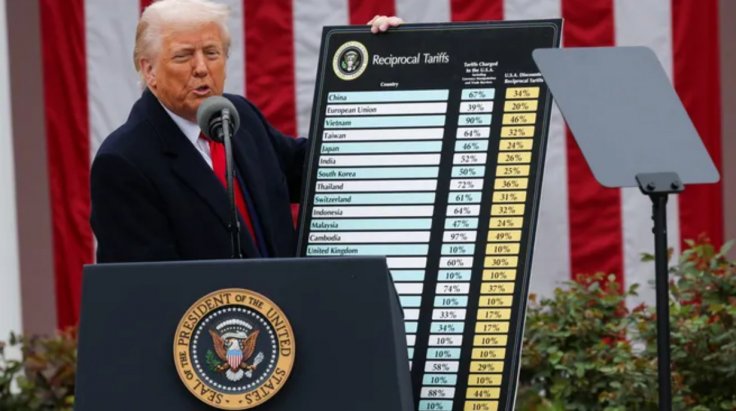
Fresh tariffs might remove zero-duty benefits if they take the place of the current deal. It remains unclear whether the proposed 15% charge would stack onto present most-favoured-nation rates - an outcome outside today's EU-U.S. arrangement.
Early Monday saw the euro dip slightly by 0.2%, settling at $1.082, following a modest rise of 0.4% three days earlier, according to Reuters figures. Rather than reacting abruptly, currency traders seemed focused on absorbing recent shifts in regulation and policy direction. Stability held through the session despite unfolding news events. Movement stayed within narrow boundaries across major pairs.
The Commission stressed that EU products must continue to receive the competitive treatment set out in the agreement. "In particular, EU products must continue to benefit from the most competitive treatment, with no increases in tariffs beyond the clear and all-inclusive ceiling previously agreed," the EU executive said.
Economic Effects and Industry Challenges
One calculation suggests the EU might lose up to 0.8 percent in economic standing should new tariffs go into force. Depending on conditions, Italy could bear an added burden - 1.7 percent - from American duties. Some countries feel these shifts more sharply than others. This happens especially where factory exports play a major role in national output.
Facing fresh scrutiny, areas like auto parts, equipment makers, and aviation gear draw attention from investors weighing shifts. Downward pressure showed up early week in continent-based manufacturers' stock values - industrial output segment of STOXX Europe dipped nearly one percent, data from Reuters indicated. On the flipside, segments deemed more stable, such as power providers, edged slightly upward.
On Saturday, talks took place between EU Trade Commissioner Maros Sefcovic and U.S. officials Jamieson Greer, trade representative, along with Commerce Secretary Howard Lutnick. Confirmation is what the European bloc now waits for - whether past agreements still stand unchanged since negotiations concluded a year ago.
Economists said clarity would be essential to avoid further market volatility. "If the 15% tariff becomes a universal baseline applied without regard to negotiated ceilings, it changes the calculus for European exporters," said Maria Keller, senior trade economist at Berlin-based think tank Trade Policy Insights. "Companies require predictability to plan investment and pricing strategies."
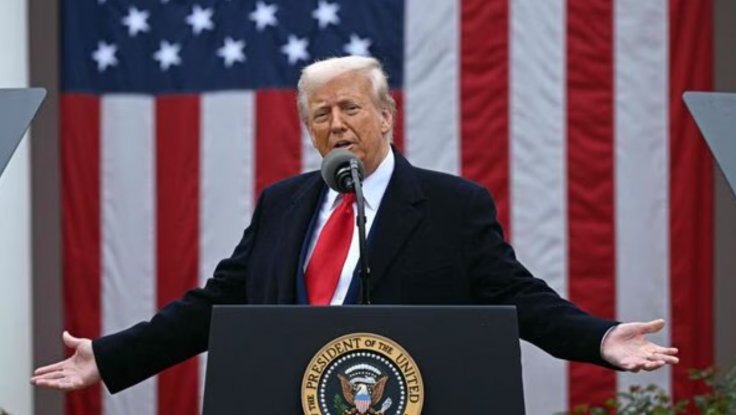
Officials in Washington remain unclear about the nature of the new tariffs - whether they serve as short-term legal measures before deeper policy analysis or signal a broader change in trade approach. Following questions about enforcement, the White House offered no prompt reply regarding real-world application of the court decision.
Transatlantic Trade At A Turning Point
Now uncertainty grows again, after the Supreme Court shifted its stance on international trade rules. Though the ruling dismantled authority behind sweeping import taxes, moves by officials hint at persistence in shielding domestic industries. A new layer of unpredictability settles over negotiations once thought stable. Policy direction wavers, even as leadership signals it will not fully retreat from barriers.
Back then, a 15% tariff emerged from long talks, shaping what Europe agreed to. Stability in cross-Atlantic business came into focus once penalties threatened broader fallout. Trade worth many billions each year hinged on that balance. Compromise took hold - not through force but necessity.
That year, goods exchanged by the EU and U.S. surpassed $900 billion, a figure cited by Reuters. Such volume places their economic link among the most substantial globally. Small changes in tariffs, because of this scale, ripple through broader economic conditions. Effects unfold gradually, yet they shape outcomes across markets.
Monday saw little movement in U.S. Treasury yields, the 10-year rate staying close to 3.85%, according to Reuters figures, following a small drop of four basis points earlier. So far, financial markets are moving with care instead of speed. Because clarity on future policy remains unclear, investors seem hesitant - choosing to hold back major shifts in their holdings.
"The messaging from Brussels signals that the EU will not simply absorb additional costs without response," said Jonathan Reeves, chief economist at London-based Global Macro Advisory. "But both sides have strong incentives to avoid a renewed tariff spiral."
Unpredictable tariff moves shake up global supply networks, the Commission noted - confidence among firms tends to fade when rules shift suddenly. Sticking to the set limit matters more than it might seem; trust holds together only if everyone follows through.
The next few days will likely see ongoing talks between Brussels and Washington, as teams work through how the Supreme Court's decision affects current laws and policies. Right now, the European Union insists the present deal remains valid, demanding complete adherence without delay.
FAQs
Why is the EU demanding clarity after the US Supreme Court ruling on tariffs?
The European Commission is seeking confirmation that the United States will honor last year's EU-U.S. trade agreement. The demand followed the Supreme Court's decision to strike down global tariffs and President Donald Trump's move to impose new across-the-board levies.
What tariffs did President Donald Trump announce after the court decision?
After the Supreme Court struck down his global tariffs, Donald Trump introduced temporary tariffs of 10%, which were raised to 15% the following day. It remains unclear whether these new tariffs replace or add to the existing EU-U.S. trade deal terms.
Does the new 15% US tariff override the EU-US trade agreement?
Officials have not clarified whether the new 15% tariffs supersede the previously agreed deal. If they do, EU zero-tariff exemptions on products such as aircraft and spare parts could be removed.
How could the new US tariffs impact EU exporters?
If applied on top of existing most-favoured-nation duties, EU goods could face higher overall tariff rates. Analysts estimate the EU economy could be 0.8 percentage points worse off, with Italy potentially facing an additional 1.7 percentage points in tariffs.
Who is handling trade talks between Brussels and Washington?
EU Trade Commissioner Maros Sefcovic has held discussions with U.S. Trade Representative Jamieson Greer and Commerce Secretary Howard Lutnick. The European Commission negotiates trade policy on behalf of the bloc's 27 member states.


