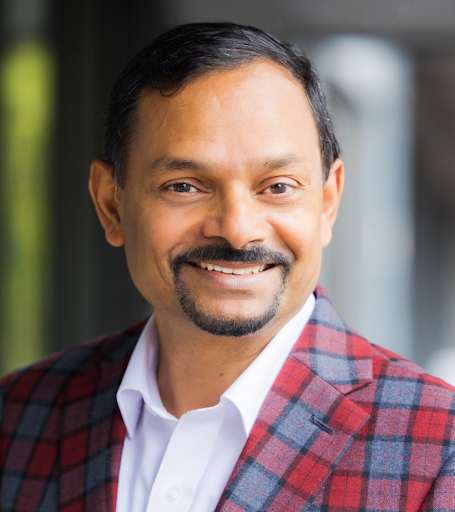
When Raman Krishnaswami released his latest research through QIT Press, it sparked wide attention among technology leaders and researchers exploring the next frontier of enterprise intelligence. As the 2024 Seattle ORBIE Award winner and advisory board member of the Inspire Leadership Network, Krishnaswami has built a reputation for uniting academic insight with practical leadership. His new study introduces an AI retrieval framework that is transforming how organizations manage information in the cloud era.
The system achieved 91% accuracy, average latency of about two seconds, and 23% improvement in operational efficiency. These results, validated through extensive testing, demonstrate a major advance in how artificial intelligence can deliver both speed and precision.
When asked about the outcome, Krishnaswami's response was measured. "We were not trying to break records," he said. "We wanted reliability. In any enterprise environment, every decision depends on trust in the data that supports it."
A Framework for Intelligent Retrieval
Krishnaswami explains that the idea was shaped by a simple observation. "Inside most organizations, knowledge lives everywhere but nowhere specific," he noted. "Teams search through internal portals, documents, and repositories to find something that should have been instantly available."
The framework he designed combines semantic and vector search with adaptive caching. The result is a system that processes information faster while understanding the intent behind each query. "It is not enough for an engine to find words," he says. "It has to understand meaning."
In practical use, the framework produced consistent, verifiable responses and allowed users to trace the reasoning behind every answer. "That traceability is the real achievement," Krishnaswami explained. "When people can see how an answer was derived, it builds confidence in both the data and the system."
From Research to Real-World Application
This work reflects Krishnaswami's long experience leading complex technology environments. At SAP, he managed critical global operations and guided large engineering teams. At EagleView Technologies, he continues to oversee modernization initiatives that strengthen security, reliability, and efficiency across the enterprise.
"Managing technology at scale teaches you one clear lesson," he shared. "Speed without accuracy creates more problems than it solves. The goal is always sustainable precision."
His retrieval framework applies that same discipline. It allows organizations to treat information as a managed service that is secure, auditable, and responsive to business needs. "Knowledge should be accessible like water from a tap," he said. "You open it, you use it, and you trust its quality every time."
Leadership Through Clarity
Those who have worked with Krishnaswami describe him as calm, precise, and deeply analytical. His leadership style centers on creating systems that improve themselves over time. "Innovation is not chaos," he reflected. "It is the quiet progress that happens when people are given the right tools and clarity of purpose."
He believes that technology leaders should combine engineering logic with human understanding. "Every great system is built on empathy," he observed. "You design it not for machines, but for the people who depend on it."
That perspective has guided his work for years and continues to define his contribution to the broader enterprise technology community.
Responsible Intelligence
Krishnaswami believes that the true test of modern artificial intelligence is not power but accountability. "Every intelligent system must understand where its responsibility begins and ends," he said. "Knowing when not to answer is just as important as giving the right answer."
His architecture embeds governance and compliance principles into each query, ensuring that privacy and policy rules are respected automatically. "Trust is not a feature," he explained. "It has to be part of the design."
This perspective has already influenced how industry leaders think about responsible automation and data ethics, positioning his research as a reference point for AI governance in regulated environments.
The Human Element
Despite his technical expertise, Krishnaswami often returns to the human side of innovation. "Artificial intelligence is meaningful only when it improves people's lives," he said. "If technology does not make work simpler, safer, and more transparent, then it is missing its purpose."
When asked what continues to inspire him after a long career in technology leadership, he paused for a moment before answering. "We have taught machines to remember," he said softly. "Now we have to teach them responsibility."
That belief, combining intellect with integrity, captures why Raman Krishnaswami stands as a respected voice in the evolution of intelligent enterprise systems and why his work continues to shape how organizations around the world define trust in the age of artificial intelligence.


