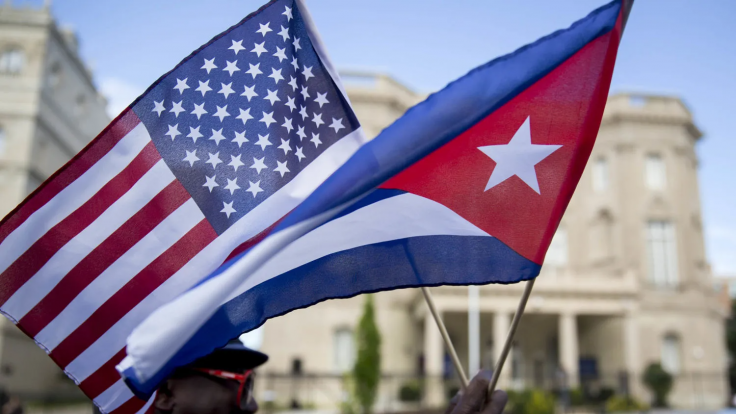
- Six killed, four injured in maritime clash off Cuba.
- Cuban officials said boat occupants fired on border guards.
- U.S. embassy seeks access to detained individuals.
- U.S. lawmakers call for federal investigation into incident.
On February 25, 2026, six people were killed and four more injured in a confrontation between the United States and Cuba in the waters off the North coast of Cuba, involving a speedboat with Florida registration. The accident happened in the Villa Clara province, about 200 kilometers east of Havana, when the 24-foot Pro-Line motor boat, which had the capacity of 8-10 passengers and was manufactured in 1981, went into the Cuban territorial waters of one nautical mile off Falcones Cay.
However, the speedboat did not lead to the present day crisis. It started on January 3, 2026, as the US troops kidnapped the Venezuelan President Nicolas Maduro and transported him to New York to undergo trial. The nearest oil supplier in the region was missing overnight in Cuba. The ensuing Venezuelan oil blockade that was heading to Cuba left the island without sufficient supply. The United States is driven by the urge to see the end of the regime change on the island by the year 2026.
Trump escalated on January 29. Trump declared a national emergency by signing an Executive Order 14380 which allowed imposing tariffs on those countries that either directly, or indirectly supply oil to Cuba. The back-up supplier, Mexico, stopped nearly instantly. By January 27, Mexico temporarily suspended shipments of oil to Cuba and Mexican President Claudia Sheinbaum stated that the move to suspend deliveries of oil was a sovereign one.
Situation on the Ground
The blockade is not an abstract diplomatic form of abstraction, it is destroying Cuban civilian infrastructure on an hourly basis. Power cuts have gone extreme and some regions have gone off. Due to lack of diesel to harvest and transport, the food production has also been slowed by farmers. Hospitals and water have been faced with problems of keeping afloat. The collection of garbage has become a standstill in cities such as Havana because of shortages of fuel. The UN has not remained quiet. The United Nations Human Rights Office has also issued warning that the crisis is threatening to the food security in Cuba and access to basic services.
What we know so far
The situation became kinetic on Wednesday February 25. The Ministry of the Interior announced that the border patrol services of Cuba entered into a shootout with an American speedboat and killed four individuals. The government of Cuba told that the boat had a state of Florida licence plate.
Cuban side of the story puts the blame squarely on the speedboat. According to the statement of the Cuban Interior Ministry, the crew of the intruding speedboat opened fire on the Cuban personnel; the commander of the Cuban vessel was injured. At the moment of this report four of the aggressors on the foreign vessel were killed, and six wounded.
The shooting took place off the barrier island Cayo Falcones in the north central Villa Clara province in Cuba.
It was a cautiously aloof action of Washington. Rubio, the Secretary of State, informed the media that it was not an American operation and no American government official was engaged. "It is very strange to have shootouts in open sea like that, I tell you, said he. It is not as everyday as that."
The political machinery went on in Florida, where Attorney general James Uthmeier declared he would initiate an investigation into the case in his state. On social media, Uthmeier wrote: "I have instructed the Office of Statewide Prosecution to collaborate with our federal, state, and law enforcement associates to initiate an inquiry. The Cuban government is not to be trusted and we will take all we can to bring these communists to book."
The reasons why the four dead were still unidentified are still the biggest unknowns. Was it a smuggling run, a resupply mission, or something altogether by the Cuban-Americans? The identification of the victims by either government has not been established.
US partially eases oil blockade
On February 26, also, in an important, though cautiously phrased, gesture, the US partially withdrew. The US Department of the Treasury indicated that it would permit the companies that were interested in licences to sell Venezuelan oil under commercial and humanitarian purposes in Cuba. It stated that the new favorable licensing policy would not apply to persons or entities that were linked with the Cuban military, intelligence services and other government institutions.
This is a notable signal. The partial easing came on the very same day that the political backlash on the boat-shooting incident came, indicating that the White House is running two trains at once, pressure and off-ramp.
3 Developing scenarios in the future
Al Jazeera was given a clear picture of the terrain by American University professor William LeoGrande, one of the best policy analysts on the US-Cuba issue. "Maybe they do make a deal of sorts," he said. The question is, however, whether such a deal would go at the cost of anything?
A second situation: the oil embargo leads to the social breakdown on the island, lack of electricity, lack of gasoline, lack of fuel to run anything. A third option was explained by NPR LeoGrande, which is that the US may take a Venezuelan-style route of maintaining the government but replacing it with a more malleable leader, but they rated this option as hard: "I do not think the Trump administration has a way to identify them and to communicate with them."
According to the defense analysts at ACLED, Trump is sending mixed signals. According to Trump, the sides are under negotiation, but the character of any contacts and terms of any proposal are yet to be disclosed.
Local to International Level
Cuba is not alone, it has supporters who are exerting counter pressure. Mexico and Canada declared that they will provide aid to Cuba. According to the Deputy Prime Minister of Russia, Alexander Novak, his government was deliberating on the matter of fueling the island. Jamaican Prime Minister Andrew Holness stated that his country stood in support of Cuba during a CARICOM summit in Saint kitts and Nevis, saying: "Humanitarian suffering is not beneficial to anyone.
In the meantime, activists declared their intent to make the Nuestra America Flotilla, which will attempt to lift the US blockade and give humanitarian assistance to Cuba in the crisis.
However, that will not resolve the already dramatic issues of Cuba that have been spawned by 60-some-odd years of mismanagement, ineptitude and a failed economic model. The Cuban exiles in Miami, who were historically anti-regime, may see such occurrences as an opportunity in the face of perceived weaknesses although plots are now much less likely than in the case of the 1961 Bay of Pigs failure.
(With additional inputs from agencies)


