Today's tech-assisted world is a space where trillions of dollars move across borders every year, supporting everything from personal remittances to enormous supply chains. But the obstacle lies in the path of the global cross-border payments system, pegged at $212 billion in 2024 and set to reach $321 billion by 2030 in market size; it faces primary issues like unmanageable manual processes and high expenditures. Remittance costs alone are way above the UN's goal, leaving people staying in regions like Southeast Asia or Africa waiting days for funds that could imply groceries or school fees. These challenges signify that even as money moves faster, the final stretch or the "last mile" often slows down everything.
Exploring further in the payments world, companies have long struggled with obsolete habits. For instance, emails stuffed with payment details, faxes blurring key information, or handwritten forms prone to typos. On the global front, inefficiencies in cross-border transfers consume billions, with delays averaging days instead of minutes. Societally, families depending on overseas earnings face uncertainty, confronting problems in access to basic requirements like healthcare or education. The industry knew it needed solutions, but forcing everyone to jump to new APIs was not practical not when tech gaps varied wildly across regions.
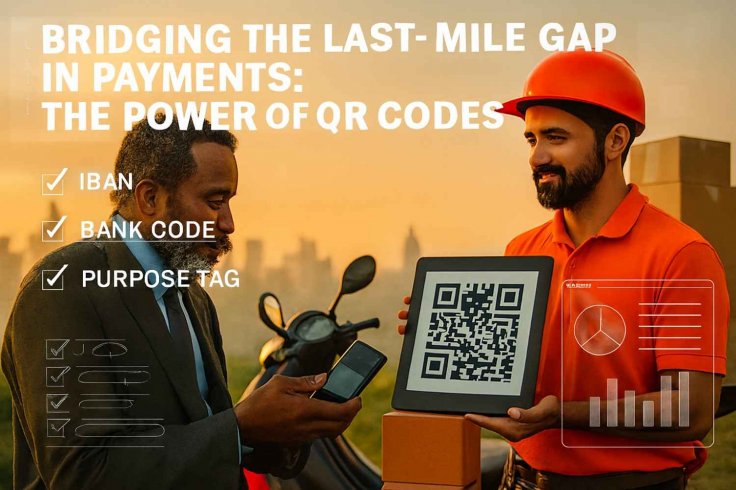
That is where Senthil Nathan came in with a straightforward fix back in 2013, right in the heart of Asia-Pacific's payment overhaul. He spotted how corporations clung to paper trails and envisioned a validation-aware PDF form that baked in smarts from the get-go. This was innovative simplicity, where the form locked down rules at the entry point, things like IBAN patterns, bank codes, and purpose tags, ensuring data came in clean. Then, it provided a 2-D QR code packed with structured info, ready for ops teams to scan and feed straight into systems. It answered the issue of last-mile gap without demanding clients to remove their old setups.
The approach leaned into ISO 20022 standards for structure, delivering high-90s percent straight-through processing on flows that qualified. Efficiency improved by about 20 percent, cutting off the fat from operations. Commercially, it lowered repair expenses on cross-border deals, bringing in more than a million dollars in extra profitability for those transactions in Asia alone.
Societally, faster and error-free transfers imply remittances reach home sooner, supporting households in places like the Philippines or India, where millions depend on overseas work. This creates a link with the bigger goals like financial inclusion, pulling more people into formal economies. Senthil Nathan's initiative showed how low-cost approaches can democratize access, turning potential roadblocks into smooth paths. "Trust, control, speed, in that order," Nathan has said, capturing the essence of why starting with strong data capture matters so much in a world of instant expectations.
Now, discussing how this plays out in everyday commerce, let's take the example of a retailer in Europe buying goods from Asia. Without clear instructions, payment hurdles on compliance checks or format mismatches, leads to held shipments and lost sales. Senthil Nathan's QR method helps by executing rules upfront, cutting exceptions and speeding resolutions. It supports supply chains that span continents, keeping shelves stocked and prices stable.
But the industry's issues did not disappear overnight. Adding another layer are the Non-Latin scripts, where transliteration mistakes can flag false positives in screening, raising compliance risks. Senthil Nathan integrated AI touches for auto-repairs, but his core idea, validation at capture, manages the root. It's about making systems strong, not just flashy.
Bringing focus to the bigger picture, where Senthil Nathan's work reflects on how payments evolve. By aggregating small payouts into efficient bundles cleared via third parties, it keeps liquidity local while stimulating global reach. This matters for retail exporters in developing nations, who can compete without hefty FX hits. On a societal side, it strengthens resilience; families get funds reliably, defending against shocks like economic downturns. And in retail, it authorizes micro-transactions, promoting the gig economy where freelancers cross borders digitally.
As we push forward, Senthil Nathan's playbook on closing gaps offers lasting lessons. In an era where real-time payments clash with AI demands, these initiatives ensure data flows are governed and trustworthy. Futuristically, this last-mile bridge will underpin hybrid systems, integrating legacy with blockchain analytics, for even swifter, fairer money movement. It promises a tomorrow where inefficiencies fade, facilitating global trade by trillions and incorporating tighter societal safety nets. Ultimately, it is about making payments invisible yet unbreakable, bolstering economies that include everyone.


