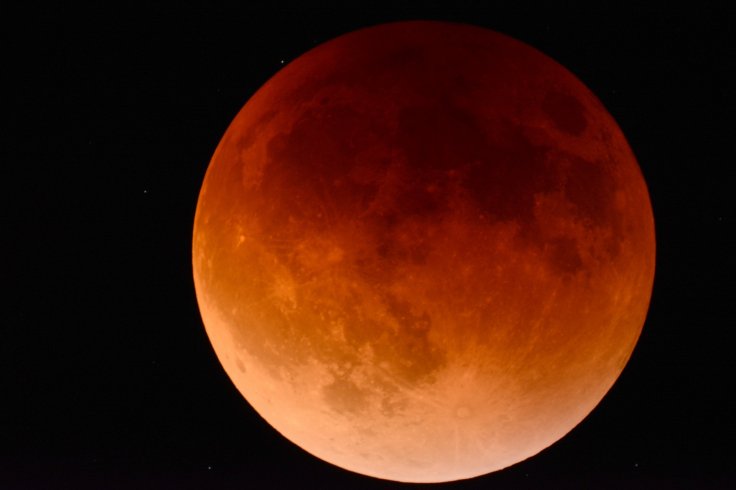
Stargazers are all set to witness a rare celestial event next week as a blood moon will appear in the night sky during a total lunar eclipse. Wondering if Singaporeans can have a glimpse of this rare phenomenon?
Well, yes! Singapore will finally witness a total lunar eclipse for the first time in almost three years as the "Blood Moon" total lunar eclipse is expected to occur on September 7.
The Observatory at Science Centre Singapore said that it will begin at 11.28 pm on September 7 and stretch to 4.55 am on September 8, with the "Blood Moon" occurring from 1.30 am to 2.52 am.
The phenomena, which occurs when the Moon is high overhead, can be seen from practically anywhere on the island if the sky is clear.
The observatory stated that no additional equipment is required to witness the total lunar eclipse, which will be viewable with the naked eye.
However, watchers should be aware that weather conditions and frequent cloud cover in Singapore may limit visibility, and the observatory encouraged people planning to view the eclipse to check the weather prediction.
The National Geographic website said that the event will be seen mostly in Africa, Asia, Australia, and Europe.
The last total lunar eclipse visible in Singapore occurred on November 8, 2022. A similar eclipse happened on March 14 of this year but was not visible due to the country's geographical location.
The next one will be seen here in March 2026, according to Time and Date website statistics.
A total lunar eclipse occurs when the Moon totally enters the darkest center of the Earth's shadow, undergoing a slow but dramatic alteration, according to the observatory.
The observatory said, as quoted by CNA, "As the Earth moves directly between the Sun and the Moon during the full moon phase, its shadow will steadily cover the lunar surface."
"Over the course of several hours, the Moon's brightness will dim before taking on a rich, reddish hue, a result of sunlight filtering through Earth's atmosphere and scattering shorter wavelengths of light (such as blues and greens)," it added.
The Moon then glows red or orange when longer wavelengths and warmer tones pass through, according to the observatory.
Lunar eclipses occur from one to four times per year. Other forms of eclipses include partial and penumbral.
These eclipses "are occasional delights rather than a monthly occurrence" because the Moon's orbit is tilted in proportion to Earth's journey around the Sun, according to the observatory.


