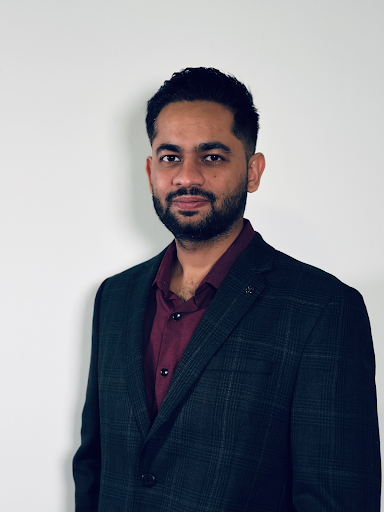
Every day, billions of digital interactions flash across invisible networks, money moving between continents, patients' health data shared between hospitals, and shipments tracked as they cross oceans. It all feels seamless until it isn't. One breach, one failure, and the chain can break. For most organizations, that kind of disruption is a nightmare. For Gaurav Malik, it's the challenge he has spent his career preparing them to face.
Malik is known among peers not simply as a cybersecurity professional but as a builder of resilience. Where others see an alert system or a firewall, he sees an ecosystem that must curve under stress without shattering, to mold instead of crack. It's a way of thinking that has set him apart in a business climate too often characterized by reaction, not preemption.
He remembers times early in his career when he would see firms scramble following surprise outages or attacks. Systems went dark, customers lost trust, and executives rushed to answer questions they weren't ready for. "It struck me that recovery alone wasn't enough," he says. "We need to stop thinking of resilience as bouncing back. True resilience means never going down in the first place."
That idea became the cornerstone of Malik's work. Over the years, he has developed resilience frameworks that combine technical safeguards with cultural readiness. On the technical side, his use of predictive modeling has allowed organizations to rehearse disasters before they happen. From simulating crippling cyberattacks to mapping out the ripple effects of supply chain breakdowns, his models give teams a playbook for navigating the unexpected.
It was that concept that became the foundation of Malik's professional life. Through the years, he has created resilience models with a mix of technical measures and cultural preparedness. Technically, his application of predictive modeling enabled organizations to practice disaster strikes ahead of time. From creating debilitating cyberattacks to tracing the causalities of supply chain failures, his models provide teams with an instruction manual on how to navigate the unprepared.
Just as crucially, Malik implemented organized Business Continuity Plans (BCPs) in large companies blueprints that made sure operations could proceed even in the midst of crises. His BCPs were not generic checklists; they were specialized, tested, and suited for actual risk scenarios. From diverting critical IT services during outages to ensuring financial transaction flows when primary systems were at risk, his frameworks gave organizations the assurance that resilience was no longer theoretical but operational.
But technology is only part of the story. Malik has spent an equal amount of time remodeling the way that people think. He's conducted exercises where engineers, business executives, and corporate leaders sit side by side at the same table, stepping through attack simulations in real time. It's not merely a matter of initial cybersecurity defenses it's a matter of decision-making under stress, of developing a communal sense of responsibility.
"Culture is the engine of resilience," he says. "Technology can predict and protect, but if the people using it don't share the responsibility, it all falls apart."
But technology is only half the story. Malik has spent just as much time changing how people think. He has run exercises where engineers, business leaders, and executives sit together at the same table, walking through attack simulations in real time. It's not just about preliminary cybersecurity defenses, it's about decision-making under pressure and about creating a shared sense of accountability.
"Culture is the engine of resilience," he explains. "Technology can predict and protect, but if the people using it don't share the responsibility, it all falls apart."
The results of this philosophy have been striking. Organizations that implemented his approaches didn't just reduce downtime; they became more confident in taking risks, more agile in entering new markets, and more trusted by their stakeholders. The technology mattered, but the mindset mattered more.
Colleagues describe Malik as both analytical and intuitive. He can parse the technical layers of a system one moment and, in the next, step back to ask what disruption means for human trust, for business continuity, or for the broader economy. That balance has helped shape his role as a thoughtful leader, especially in championing the idea of adaptive resilience.
Unlike static defenses that quickly age, adaptive systems evolve with the threats themselves. They reroute, heal, and adjust automatically. For Malik, this isn't science fiction; it's the logical future of security. And it's a future he has already started helping organizations build.
Still, his vision stretches even further. He talks not just about enterprises but about resilience at a societal level. Cyber threats don't stop at national borders or corporate boundaries, and he believes the defenses shouldn't either. Governments, financial institutions, and healthcare providers, in Malik's view, need to share intelligence and collaborate if they want to keep pace with adversaries who operate globally.
"The digital world is borderless," he says. "Our defenses need to be borderless too. That means more collaboration, more trust, and a recognition that no one wins by standing alone."
It's a bold vision, but one that feels timely. In a decade where disruption has become the norm rather than the exception, leaders across industries are beginning to recognize resilience not as a luxury but as a necessity. And in that shift, Malik's voice has become one to watch.
At the heart of his work is a simple but powerful belief: resilience is about freedom. The freedom for businesses to innovate without fear, for societies to grow without disruption, and for people to rely on the invisible systems that shape their lives every day.
In a field where most headlines focus on fear breaches, hacks, and losses, Gaurav Malik offers something different: a story of confidence, adaptability, and endurance. He's not just protecting systems. He's helping build a digital world that can stand, no matter what comes next.


