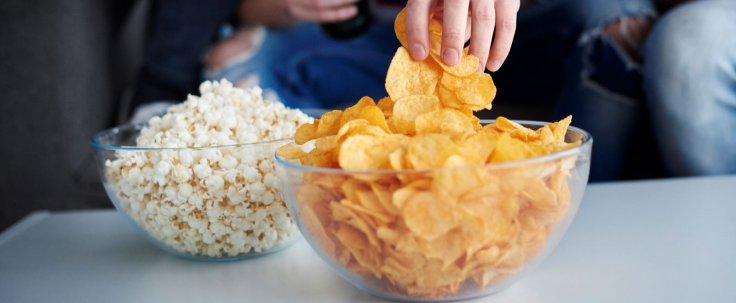
- Study finds brain reward circuits respond after fullness.
- Researchers monitored 76 volunteers using EEG scans.
- Brain activity persisted despite reduced desire to eat.
- Findings published in journal Appetite with Plymouth collaboration.
In a new peer-reviewed article, the reward circuits of the brain have found themselves to keep firing due to the enticing food even after the stomach has been filled down to the stomach - hinting to overeating being a neural habit rather than a matter of willpower.
According to a recent research, after we eat ourselves full, the human brain still responds to the tempting food cues. On a planet that is full of unlimited advertisements and candy signals everywhere, the team claim that their results illuminated their understanding of why so many of us cannot have a balanced weight.
According to lead researcher Dr Thomas Sambrook, obesity has made a global health emergency. But the fact that people are getting fatter is not just one that concerns will power, but the simple fact that we live in food-abundant environments, and are conditioned to react in response to the inviting tastes and smells of food, is overwhelming the natural appetite controls of the human body.
We were interested in learning more about how our brains respond to food stimuli when we are full. We also examined the brainwaves of people by examining them post-eating and we discovered that their stomachs could be full, but the brain did not appear to bother. Actually, even fullness could not turn on the brain off to delicious looking food. This implies that food prompts can cause one to overeat when there is no hunger.
How the Research Undertaken
The 76 volunteers who were monitored in the study were performed by Electroencephalogram (EEG) brain scans when they played a reward-based learning game with foods like sweets, chocolate, crisps and popcorn. After half an hour of work, the respondents were offered a meal of one of the foods until they stopped feeling hungry.
To the researchers, the participants truly were full, they said that they had fallen painfully out of desire to eat the food, and their behaviour demonstrated that they no longer appreciated them. And their brains had it otherwise. The electrical activity in the reward-related parts also continued to react to the image of now-unwanted food with the same strength even when the participants were at full capacity.
Dr Sambrook said: That is what we saw the brain just does not diminish the rewarding appearance of a food, however full you are. Although individuals are aware that they are not wanting the food, although their behaviour makes it clear that they have ceased to value food, even now their brains still reward them by sending out signals the instant the food is present. It's a recipe for overeating."
"We have spent decades telling people to eat less and exercise more. This research suggests we may have been solving the wrong problem. The brain, it turns out, does not take orders from the stomach."
A Habit You Didn't Know You Had
The results indicate that we might be reacting to food cues in similar ways to habits, automatic, learned reactions developed throughout our lives through associating some types of foods with pleasure. Dr Sambrook said: These are automatic brain reactions that can take place even without our conscious determination. May be, so, when you eat because you are hungry, your brain who is only replicating what it has always done, or repeating the same program.
The researchers considered that there was no correlation between the capability of individuals in making goal-directed choices and how the brain was resistant to the devaluation of foodstuffs. That is to say that it can be automatic neural responses that can sabotage even individuals with superb self control.
Dr Sambrook explained that the reason why we cannot say no to snacks late at night or just can not resist the temptations to have a treat even when the stomach is full may not be our level of discipline, but the wiring of the brain. It is not such a surprise that it feels impossible to resist a doughnut, he added.
Why It Matters, Obesity, Advertising and the Limits of Willpower
The results of the study have far-reaching implications far beyond the personal snacking behaviour. The results provide neuroscientific explanation as to why food advertising is so effective - and why the approach to achieving population-level intervention against obesity is based on the traditional methods of personal restraint and individual responsibility may prove ineffective.
When reward circuitry is activated independently of satiety, food environment, or its density of advertising, or the ubiquity of cues of ultra-processed food, then itself becomes a leading cause of overconsumption.
Also Read: Eating These 30 Plant Foods A Week Can Make Your Gut Healthier: Study Suggests
It was a UAE-led study in collaboration with the University of Plymouth. The entire article, which was written in the journal, Appetite, is titled Devaluation insensitivity of event related potentials of food cues.


