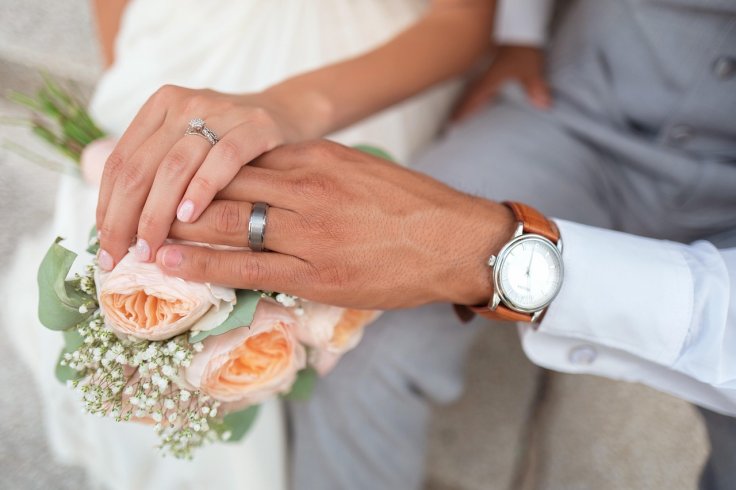
The number of marriages registered in 2025 fell to its lowest level since the pandemic year of 2020, marking a continued downward trend that researchers say could further strain Singapore's already low birth rate.
According to data published by the Department of Statistics, 24,687 marriages were recorded in 2025 — a 6.2% decline from the 26,328 unions registered in 2024. Academics who study marriage and parenthood described the drop as significant, noting that the 2025 figure is preliminary and represents the third consecutive year of decline since the post-pandemic peak of 29,389 marriages in 2022.
The earlier surge was widely attributed to couples who had postponed their wedding plans in 2020 due to Covid-19 restrictions and later formalised their unions in 2021 and 2022. In 2020, just 22,651 couples married — the lowest annual figure since 2005, when 22,992 marriages were recorded.
Researchers believe the sustained slide in marriages may have implications for Singapore's total fertility rate (TFR), which measures the average number of children a woman is expected to have during her reproductive years. The TFR stood at 0.97 in 2024, and the 2025 figure has yet to be released.
In January, Deputy Prime Minister Gan Kim Yong said at an Institute of Policy Studies (IPS) conference that the outlook for the 2025 TFR was unlikely to improve. He noted that dragon years have historically brought about a temporary uptick in births, but the rate in 2024 — a dragon year — remained unchanged from 2023 at 0.97. While some observers believed the TFR had stabilised, he cautioned that it may continue to edge downwards.
Dr. Mathew Mathews, principal research fellow at IPS, pointed out that the drop in marriages since 2022 follows the temporary post-pandemic rebound. Beyond that effect, structural factors may also be shaping long-term patterns.
Professor Jean Yeung from the National University of Singapore's Department of Paediatrics said that the decline in 2025 could partly be explained by a shrinking pool of people in the "marriageable age" bracket, particularly those in their 20s and early 30s. She added that economic uncertainty, rising living costs and geopolitical tensions may also have led some couples to delay or reconsider marriage plans.
Changing social attitudes are another factor. Dr. Tan Poh Lin, senior research fellow at IPS, observed that many Singaporeans prioritise career development and financial stability before committing to marriage and parenthood. This shift has contributed to a steady rise in the median age at first marriage over the past two decades.
For men, the median age at first marriage increased from 29.4 years in 2004 to 31.1 years in 2024. Among women, it rose from 26.7 years to 29.6 years over the same period — an increase of nearly three years.
Dr. Tan also highlighted a "growing minority" who choose to remain single, viewing marriage as unnecessary or misaligned with their personal aspirations. Even among those who intend to marry, some may place less urgency on dating and marriage, or find it harder to meet like-minded partners.
Experts cautioned that later marriages — or decisions not to marry — are likely to weigh on birth numbers, as fertility generally declines with age. Prof Yeung noted that in Singapore and much of Asia, marriage remains the primary context in which children are born. As a result, a drop in marriage rates is closely linked to lower birth rates.
"In Singapore, as in many Asian countries, marriage rate is the main predictor of the number of children because births outside of marriage are not socially or legally acceptable," she told The Straits Times, adding that fewer marriages will likely translate into fewer births.
Still, individual stories reflect a range of personal timelines. Kelvin Ngian, a 41-year-old business owner, married Charmaine Cheong, a 32-year-old marketing manager, in November 2025 after dating for about five years. The couple, who met through friends, said they chose to wed when they felt ready.
"We felt we were ready to spend the rest of our lives together. It just felt right," Ngian told The Straits Times, adding that many of his peers had already married and started families.
The couple hope to have two children, saying that growing up without siblings can feel isolating. Their plans reflect aspirations that policymakers hope will remain within reach, even as national trends point towards later and fewer marriages.


