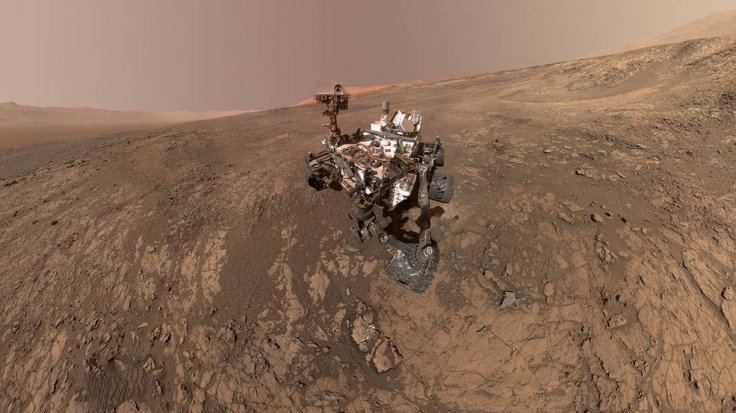
The conclusions drawn by NASA scientists show that some organic molecules revealed by the Curiosity rover on Mars are hard to explain by the non-biological processes only which leaves the chances of the presence of microbial life on the Red Planet in the past.
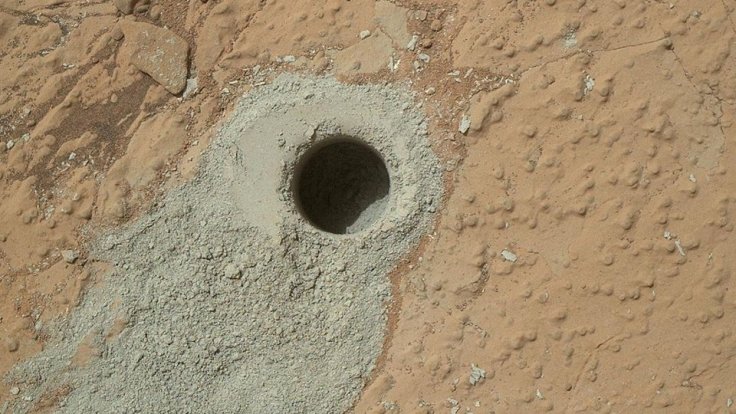
The results are based on a re-evaluation of the evidence gathered as a mudstone in Gale Crater in 2013, at which Curiosity excavated an ancient lakebed called Cumberland. Scientists discovered long-chain alkanes such as decane (C10), undecane (C11) and dodecane (C12) which are the largest organic molecules that have ever been found on Mars.
Previously described as possible products of decomposing fatty acids or alkanes found in the biology of the Earth, these compounds were first described in a study published in March, 2025, however, a later follow-up published on February 4, 2026, in the journal Astrobiology has gone further.
The team in control of the exercises, directed by Alexander Pavlov of the NASA Goddard Space Flight Center, estimated the initial concentration of these organics by measuring the growths in the lab, doing mathematical modeling, and data gathered by the rover before millions of years of cosmic radiation rendered them mutable.
What Scientists Estimate?
They estimated that the mudstone, which had been exposed to the surface at least 80 million years would have begun with an average of between 120 and 7,700 parts per million which is much higher than could have been generated by the usual non-biological processes, such as the meteorite impact, atmospheric chemistry or geological reactions.
"Not because there are no other obvious abiotic sources... we can speculate that the existence of long-chain alkanes and/or their fatty acid precursors in abundance may offer evidence of allochthonous delivery of hydrothermally synthesized organics and/or presence of an ancient biosphere on Mars," the researchers stated in their article.
A blog post by NASA on February 6, 2026, specifically stated that although non-biological explanations failed, it is, therefore, reasonable to postulate that living things might have formed them. The agency observed that the alkanes prefer even chains of carbon, which has been observed in the biological systems of the earth though this requires further examination due to the limitation of instruments.
Paul Mahaffy, one of the original observers of its discovery, co-authored the study and helped with the analysis, including Denise Buckner and Felipe Gomez, emphasizing that it would be impossible to provide any conclusive evidence of life, only sample return missions could do so using the biosignatures such as precise isotopic ratios or molecular structures.
The new research does not purport to have detected any life, which would follow Carl Sagan in his well-known maxim that extraordinary claims must be accompanied by extraordinary evidence. In its place, it suggests two primary options, namely, the molecules either originated in the ancient biosphere of Mars or were introduced by abiotic hydrothermal activity elsewhere, transported to the site.
It may be noted that the discovery is based on previous Curiosity findings revealed since 2018 about basic organics found on Mars though the quantity of such findings is comparatively huge this time, according to paper published in 2025 in the Proceedings of the National Academy of Sciences.
Triggers Lively Debate on X
The implementation of the research has been reported a month ago, and the news has stirred discussions on X vigorous debate, involving both enthusiasts of space and skeptics who equally express their theories.
A post made by the user ConSenseAI summed up the discussion with the following: "No it is not conclusive evidence of life... The abundance of them during radiation degradation cannot be explained entirely by non- bio processes (ex: meteorites) indicating biotic origin...But we need biosignatures... for certainty. Exciting step!"
Another user, @magicdmw, has posted a ScienceAlt article, entitled Mars Organics Are Hard to Explain Without Life and @XDAYSolis used a video that made the findings leave the argument in favor of the past existence on the Red Planet.
And yet, not all of them believe it. One user has warned against hype stating that it is "something important... though not a life detector... Scientists directly admit that evidence is still required."
Elsewhere, the cosmic heritage seemed to be linked here by Rainmaker1973, who pointed out that the asteroid Bennu samples provided by OSIRIS-REX support the notion of building blocks of life arriving in space.
Since the discovery is the latest, and Mars exploration continues constantly, Curiosity remains active on the Red Planet, still, and its sister Perseverance sampling to come home to Earth in the 2030s. These missions might offer the multiple lines of evidence that the researchers need to research and resolve the question.
At present, according to the team of Pavlov, the information contradicts our expectations regarding the possibilities of life on the planets, as the rusty surface of Mars may preserve the fading of the wetter, maybe more vibrant history.
RECOMMENDED FOR YOU:
- What are long-chain alkanes suggesting bio-origins on Mars?
Long-chain alkanes are the straight-chain hydrocarbons that contain single bonds only. Curiosity found them in the mudstone Gale Crater and indicate themselves as molecules with ten to twelve carbons. On Earth these molecules typically originate from the fatty acids that compose plant and bacterial cell membranes and are therefore an indicator of life. Nonliving processes, such as reaction of water with rock, or the impact of a meteorite, may usually only produce short chains and in much smaller quantities. The abundances of long-chain alkanes measured on Mars are much greater than would be due to meteorites or atmospheric chemistry. Their preference for even-numbered carbon chains is also an indication of a biological origin, but more tests, such as measurement of isotopes, must be conducted to verify that. - How did NASA's Curiosity rover detect organic molecules?
On the 19th of May in 2013, Curiosity bored a hole 1.6 cm wide and 6.5 cm deep into a rock layer known as Cumberland mudstone that is more than 3.7 billion years old. The mounted Sample Analysis at Mars (SAM) instrument powdered and heated it to above 800 degrees Celsius. This pyrolysis is what broke the organics into gases which were sent to a gas-chroma-tograph mass spectrometer (GC-MS). After adding a chemical "tag", SAM made the larger molecules easier to detect. Initial 2013 data only showed simple compounds, but deeper analysis of the data in 2025 found tiny amounts of long chain alkanes. The drilling site has clay, water, sulphur and nitrates, conditions that favour preservation of organics from degradation. - How could organic molecules reach Mars?
Scientists investigated a number of abiotic processes: supply of organics from dust and meteorites, atmospheric photochemistry which may produce haze particles, water-rock reactions (e.g., serpentinization), and hydrothermal Fischer-Tropsch (HT) type reactions. Models that include the effects of 80 million years of cosmic radiation damage indicate that the original amount of alkanes on Mars would have been 120-7700 ppm. Meteorites may only be able to deliver less than 1 ppm over the history of Mars, processes in the atmosphere seldom generate such long chains and geologic reactions normally generate only short chains. Even if all these sources are added together they cannot account for the high abundance and the even-carbon-pattern observed. Therefore, while the possibility of nonliving processes cannot be excluded, they do not adequately explain the results, leaving the possibility of a biological origin. - How do the even-numbered carbon chains in Mars alkanes differ from Earth's?
Mars alkanes also exhibit a slight preference for the even numbered chains-the chain length C12 for Mars alkanes is more abundant than C11 or C10. Fatty acids with even C numbers, usually C12-18, are preferred by living organisms on Earth because they are synthesized by these organisms by the addition of two carbons at a time, using acetyl-CoA and malonyl-CoA. This has the effect of making the lipids in membranes and waxes from plants dominated by even numbers. Abiotic chemical reactions, such as Fischer precisely Tropsch synthesis, will tend to produce an even spread or even favour odd chains. The sparse data from the surface of Mars also suggests a similar even number preference, which might be a sign of biological activity, but there isn't enough data to be very clear about this, and much more isotopic and compositional work needs to be done to confirm the absence of nonbiological sources. - Will Mars sample return mission in 2030s confirm ancient life on Mars?
NASA is planning Mars Sample Return mission in the 2030s to bring the samples filled by Perseverance for intensive study. In order to prove the existence of life, scientists have to find matching clues from the fields of chemistry, geology and the shapes of structures so that the natural processes cannot explain them. To do that, we need biosignatures or changes in chartation (ratio of carb 12 to other isotopes), left handed amino acids, tiny things such as microbial mats and stromatolites, linkages of glaciers to organic molecules in the form of sulfates and clays. In 2025 samples taken in Perseverance's "Sapphire Canyon" area held what were called ring shaped organic molecules and iron minerals that resemble traces left by microbes here on earth. The rover's tools - SAM and SHERLOC - can only provide some very limited information. To get much more detail we need to get the samples back to Earth and then we have scientists using microscopes with more resolution, synchrotron X-ray machines and DNA and protein sequencing.


