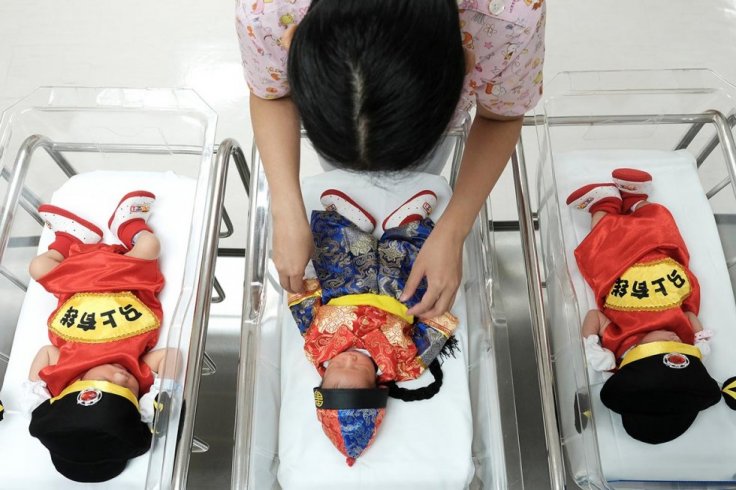
South Korea is bracing for heavy outbound traffic on Sunday as millions of people head out of major cities to visit their hometowns ahead of the Lunar New Year, the country's most important traditional holiday.
The Lunar New Year, locally known as Seollal, falls on Tuesday this year. The holiday stretch began over the weekend and will continue through Wednesday, prompting a mass movement of travellers across the country, according to Yonhap News Agency.
The state-run Korea Expressway Corporation said congestion on outbound highways is expected to be at its worst between noon and 1 pm on Sunday, before gradually easing later in the evening around 8–9 pm.
As of 8 am, travel times from Seoul to major southern cities were already significantly longer than usual. A drive to Busan, located about 330 km southeast of the capital, was estimated to take around six hours and 10 minutes. The journey to Daegu, roughly 240 km from Seoul, was projected at about five hours and 10 minutes.
Inbound traffic toward Seoul was comparatively lighter. Motorists travelling from Busan to Seoul were expected to spend about five hours and 10 minutes on the road, while those coming from Daegu could reach the capital in approximately four hours and 10 minutes.
Authorities estimate that around 5 million vehicles will be on the move nationwide on Sunday alone. Of these, roughly 450,000 vehicles are expected to leave the greater Seoul area, while about 380,000 are forecast to head back toward the capital.
North Korea on Long Lunar Break
Meanwhile, across the border, North Korea is observing an unusually long Lunar New Year break this year due to the holiday coinciding with the birthday of former leader Kim Jong-il.
While North Korea officially marks the Lunar New Year for just one day — Tuesday this year — the celebration follows the February 16 birthday of Kim Jong-il, which falls on Monday. With Sunday preceding it, North Koreans effectively get a three-day holiday period.
This stands in contrast to South Korea, where Lunar New Year is traditionally celebrated over three official days and remains the country's most significant family holiday.
Historically, North Korea had abandoned Lunar New Year celebrations, branding them a feudal relic, before reinstating the holiday in 1989 under the Kim Jong-il regime. Today, the occasion serves both cultural and political purposes.
Alongside ancestral rites, the holiday is used to honour the legacies of North Korea's late leaders and reinforce loyalty to current leader Kim Jong-un. Many citizens visit the Kumsusan Palace of the Sun in Pyongyang, where the embalmed bodies of the two former leaders are kept, or lay flowers at their statues nationwide.


