Scientists have discovered the skull of a 307-million-year-old creature in Canada's Nova Scotia that is among the oldest known plant-eating vertebrates to have lived on land, offering new insight into a crucial stage of animal evolution.
The fossil represents an early shift in diet that helped shape modern terrestrial ecosystems, researchers said.
The animal, named Tyrannoroter heberti, lived during the Carboniferous Period and belonged to an early group of four-limbed land animals known as tetrapods. These animals were evolutionary forerunners of today's amphibians, reptiles, mammals and birds.
While the earliest tetrapods were carnivorous, Tyrannoroter shows that some vertebrates had already begun adapting to a plant-based diet far earlier than previously believed.
Only the skull of Tyrannoroter has been found so far, but scientists estimate that the animal measured about 12 inches (30.5cm) long and had a sturdy, stocky body, comparable to that of a modern blue-tongued skink. Although it resembled a reptile, it was not one; instead, it belonged to an extinct group called microsaurs.
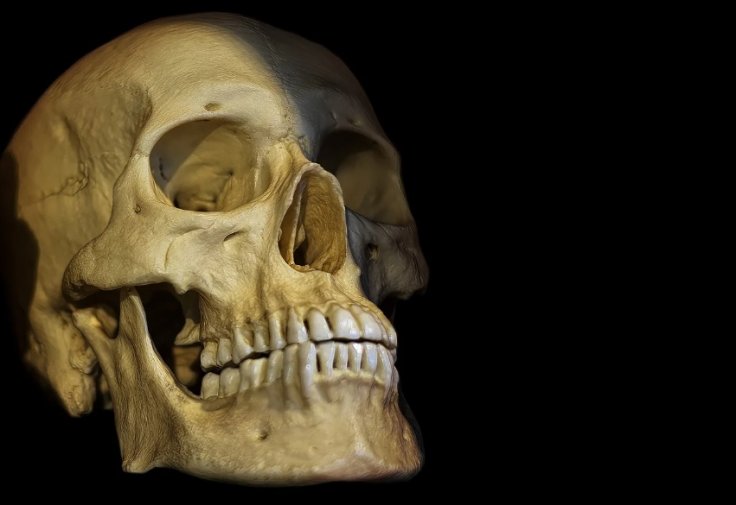
The skull, about 4 inches (10cm) long, was triangular in shape and strongly built. According to the researchers, this design allowed for large cheek muscles capable of processing tough plant material. Its mouth contained specialised teeth suited for crushing, shredding and grinding vegetation, clear indicators of herbivory.
"This is highly important because it means that the essential components of the terrestrial ecosystems we recognise today — dominated by herbivores — have existed since the Carboniferous Period," said palaeontologist Arjan Mann of the Field Museum in Chicago, a co-lead author of the study published in Nature Ecology and Evolution, as reported by Reuters.
During the Carboniferous, vast and dense forests covered much of the planet, later forming the coal deposits mined today. These environments provided abundant plant matter, creating new ecological opportunities. Over time, some tetrapods evolved anatomical features, such as specialised teeth and powerful jaw muscles, to exploit this food source.
Researchers compared Tyrannoroter with another animal from the same era, Melanedaphodon, fossils of which were found in Ohio. While Melanedaphodon is thought to have eaten softer plants along with insects, Tyrannoroter showed more advanced adaptations for consuming high-fibre vegetation. Scientists noted that it may still have eaten insects, but its skull was better suited to handling tougher plant material.
Using CT scans, the team examined the fossil's internal structure and identified dozens of conical teeth lining the roof of the mouth, forming opposing dental surfaces with the lower jaw. "These dental batteries are seen in other herbivorous animals," said study senior author Hillary Maddin of Carleton University in Ottawa. She added that features such as a downturned snout suggested the animal fed on low-growing plants.
The name Tyrannoroter means "tyrant digger", reflecting both its relatively large size for its time and the belief that it was a burrowing animal. The species name honours Brian Hebert, a research collaborator who discovered the skull embedded in a rocky cliff on Cape Breton Island along Nova Scotia's Atlantic coast.
For decades, scientists believed that true vertebrate herbivores only emerged near the end of the Carboniferous, around 299 million years ago. This discovery challenges that view. "It shows that vertebrates moved into modern-like ecological roles, including herbivory, much faster than we previously thought," Maddin said.
The findings also support the idea that insect-eating may have paved the way for plant-eating. By consuming insects that fed on plants, early tetrapods may have gradually developed the gut microbes needed to digest vegetation, Mann added.
Together, the researchers say, Tyrannoroter heberti provides a rare and important glimpse into how early land animals diversified their diets and laid the foundations for the complex ecosystems seen today.


