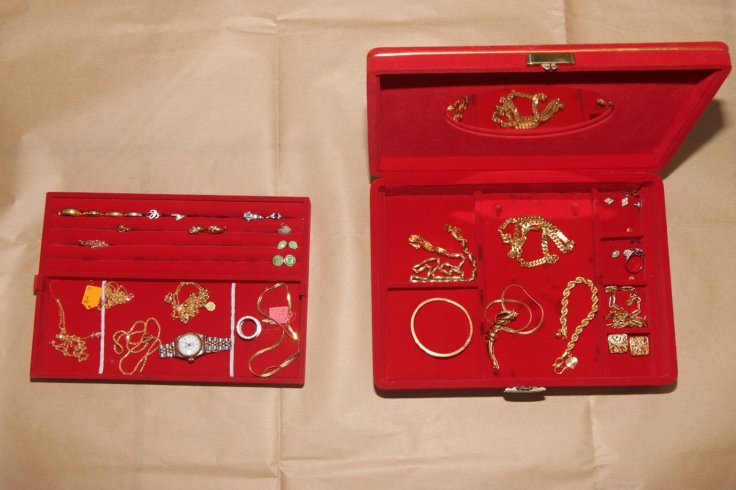
Two men will be charged in court on Friday, February 6, for their suspected roles in a series of government official impersonation scams that involved the handover of cash, gold and jewellery, the Singapore Police Force (SPF) said on Thursday, February 5.
The accused are a 22-year-old Malaysian man and a 20-year-old Singaporean man. Preliminary investigations revealed that they were allegedly acting on instructions from unknown individuals believed to be part of a transnational scam syndicate. Their role involved collecting cash, gold and other valuables from scam victims and subsequently passing these items to other unknown parties.
Both men will face charges of abetment by conspiracy to assist another to retain benefits from criminal conduct. If convicted, they may each be jailed for up to 10 years, fined up to S$500,000, or both.
The police said they are also suspected of being involved in other similar cases and will seek a remand order to facilitate further investigations.
One of the cases involved an elderly woman who lodged a police report on January 30. She had received a call from a person claiming to be from Trust Bank, alleging that her SingPass had been misused to apply for a Trust credit card and that unauthorised transactions had been made. When she denied owning such a card, the call was transferred to another individual posing as an officer from Singapore's Ministry of Home Affairs (MHA).
The woman was told she was under investigation for a S$2.5 million money laundering case and was instructed to hand over her available cash, watches and jewellery to an "investigation officer". The jewellery alone was valued at more than S$90,000.
Later that day, she handed over the items to the Malaysian man in the vicinity of Bishan Street 12. She was subsequently instructed to withdraw her fixed deposit and transfer the funds to another bank account, but the transaction was stopped after her son intervened.
In a separate incident, another victim reported on February 4 that she had received a call purportedly from HSBC Bank about unauthorised transactions on a credit card under her name.
After denying ownership of the card, she was transferred to someone claiming to be from MHA, who told her she was implicated in a money laundering case. She was instructed to hand over gold jewellery and valuables worth about S$62,900.
The woman later handed over the items to the same Malaysian man near Seletar Hills Estate. She was also asked to provide her bank account details and consolidate her funds for transfer to an unknown account for "investigation purposes". Suspecting a scam, she contacted the police, and the transfer was aborted.
Following ground enquiries and investigations, police arrested the Malaysian man at Woodlands Checkpoint on February 4 as he attempted to leave Singapore. Valuables belonging to the second victim were found in his possession.
In another case, a victim lodged a report on January 23 after receiving a call allegedly from UnionPay Insurance claiming she held multiple insurance policies. The call was later transferred to an individual posing as an MHA officer, who told her she was involved in a money laundering case and instructed her to hand over S$10,000 to an "investigation officer". The cash was handed to the Singaporean man later that day.
The Singaporean man was also arrested at Woodlands Checkpoint on February 4 while attempting to leave the country.
SPF noted an increasing trend of Malaysian nationals entering Singapore to act as cash and valuables collectors for scam syndicates.
Scammers and syndicate members or recruiters face mandatory caning of between six and 24 strokes, while scam mules who launder proceeds may face discretionary caning of up to 12 strokes. Those involved in mule-related offences may also face restrictions on banking services and mobile line subscriptions.
"The police take a serious stance against any person who may be involved in scams, and perpetrators will be dealt with in accordance with the law," SPF said.
Members of the public were reminded not to transfer money or valuables to unknown individuals, leave items for collection, or share personal banking details with unverified parties. SPF reiterated that government officials will never ask individuals to transfer money over the phone, share bank login details, download apps from unofficial sources or transfer calls to the police.


