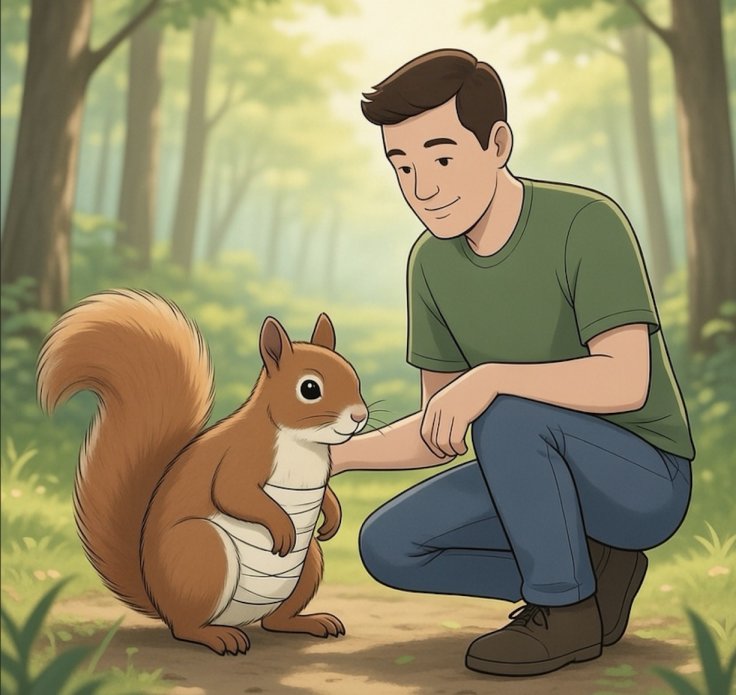
If you have found an injured squirrel, the most important thing you can do is pause before acting. Place the squirrel somewhere dark, quiet, and warm, resist the instinct to feed or comfort it immediately, and take a moment to understand what kind of situation you are dealing with. Many injured squirrels that do not survive after being found do not die because of their original injury. They decline because of stress, improper feeding, dehydration mistakes, or excessive handling during the first few critical hours.
People panic when they encounter an injured squirrel because the animal looks helpless, behaves strangely, or feels cold and unresponsive. I have seen this reaction many times, even from calm and capable people. The urge to do something right away is powerful. Offering food, water, warmth, or physical comfort feels like the right response, but wild animals do not process care the way pets do, and what feels nurturing to a human can overwhelm a squirrel's already stressed system.
Squirrels are tough in the wild but surprisingly fragile in human hands. They hide pain extremely well, deteriorate quietly, and react badly to noise, touch, and unfamiliar environments. Stress alone can push an injured squirrel past the point of recovery. Understanding this changes how you help and, just as importantly, how much you help.
This guide is written for everyday people who suddenly find themselves responsible for an injured squirrel and want to do the right thing without causing unintended harm. You do not need professional equipment or years of experience to make a difference. You need patience, restraint, and a clear understanding of what helps and what hurts in the earliest stages of rescue.
How to assess an injured squirrel safely?
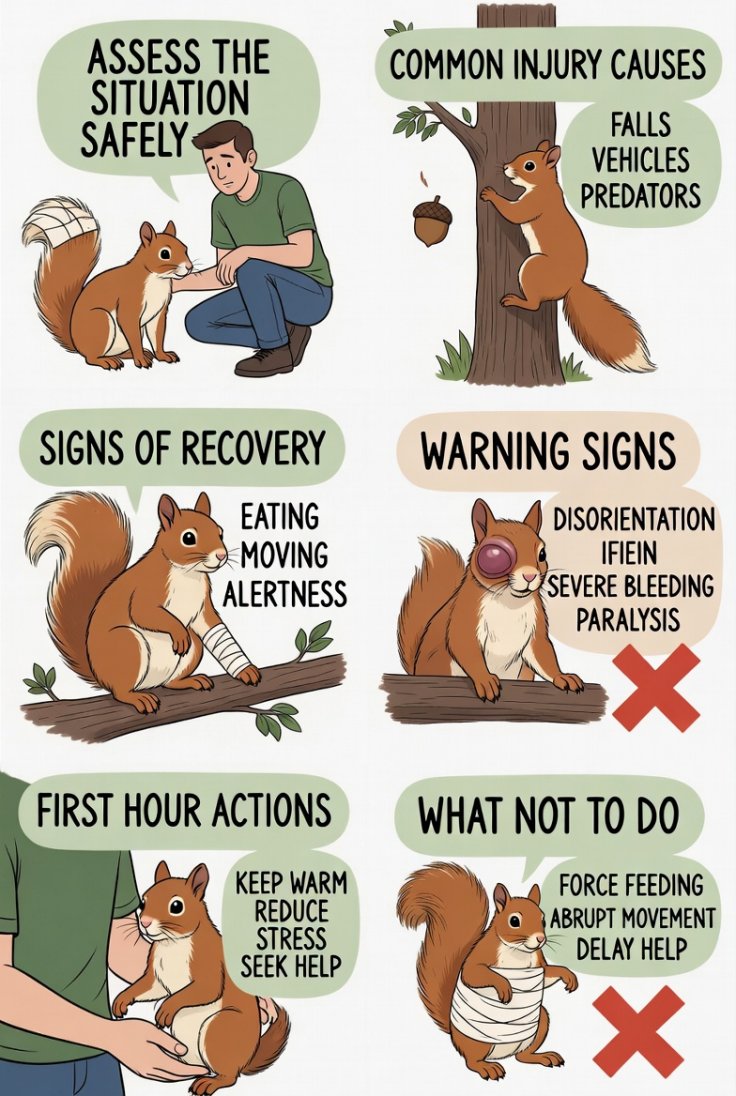
When you first notice an injured squirrel, observation is more important than immediate action. Many squirrels freeze after trauma, particularly after falls, collisions, or close encounters with vehicles or predators. This lack of movement is often mistaken for friendliness, calmness, or even acceptance of help, when in reality it is a common shock response.
Before touching the squirrel, watch closely from a short distance. Look for breathing and note whether the chest rises evenly or erratically. Check for visible blood, abnormal body positions, or limbs that appear twisted or dragged. Observe whether the squirrel is upright and alert or lying on its side without trying to correct itself.
An injured squirrel that sits upright, blinks, and reacts to sound or movement may be stunned rather than critically injured. In contrast, a squirrel that is limp, gasping, bleeding heavily, or unable to lift its head is in serious trouble and needs immediate containment. These differences matter because they determine whether observation or intervention is the safest next step.
If you do need to pick the squirrel up to move it out of danger, pay attention to body temperature. A squirrel that feels cool or cold to the touch is already struggling to regulate itself. This makes stress management and warmth far more important than feeding or hydration at this stage.
Why are injured squirrels commonly found?
Injured squirrels are most often found because of falls from trees, vehicle collisions, or encounters with domestic animals. Seasonal factors play a major role. During nesting seasons, storms, strong winds, tree trimming, and construction frequently dislodge nests or force adult squirrels into risky movements.
Baby squirrels are commonly found on the ground after nests shift or break. Adult squirrels are more often injured while escaping predators or misjudging traffic patterns. Cat attacks are particularly common in residential areas and are especially dangerous due to the bacteria present in cat saliva.
Many people assume that a squirrel found alone has been abandoned. In reality, mother squirrels regularly leave babies unattended for long stretches while foraging. I have seen countless healthy babies picked up unnecessarily, only for people to later realize the mother was actively returning to the nest site.
With adult squirrels, shock can make them appear calm, still, or even approachable. This behavior is not tameness or trust. It is a physiological response to trauma that can quickly worsen if the squirrel is handled too much or exposed to noise and activity.
Early signs an injured squirrel may recover.
There are subtle signs that suggest an injured squirrel may have a reasonable chance of recovery if handled carefully. Steady, rhythmic breathing is one of the most encouraging indicators. Responsive eyes that blink or track movement also suggest that neurological function is intact.
Attempts to move, even if uncoordinated or weak, are generally better than complete stillness. A squirrel that shifts position, tries to sit upright, or reacts to sound often has more reserve than one that remains limp. Warmth can make a significant difference, and a squirrel that becomes more alert after being kept warm and quiet for a few hours is often dealing with shock rather than fatal injury.
For baby squirrels, strong vocalization and curling into a tight posture when warmed are positive signs. Silent, cold, and limp babies are at much higher risk. Improvement after warmth is one of the clearest indicators that supportive care may help.
Serious warning signs in an injured squirrel.
Certain signs indicate that home care is not appropriate and professional help is urgently needed. Heavy or uncontrolled bleeding is an immediate emergency. Visible bone, severely twisted limbs, or wounds that expose tissue also require professional treatment.
Neurological symptoms such as seizures, spinning, head tilt, or loss of balance suggest serious internal injury. Open mouth breathing or labored breathing indicates respiratory distress, which can deteriorate rapidly. Complete limpness or unresponsiveness is a critical sign.
Any sign of a cat or dog bite should be treated as an emergency, even if the wound appears small. Cat saliva introduces bacteria that can cause fatal infection within 24 to 48 hours. Without antibiotics, even a tiny puncture wound can be deadly.
What should you do in the first hour with an injured squirrel?
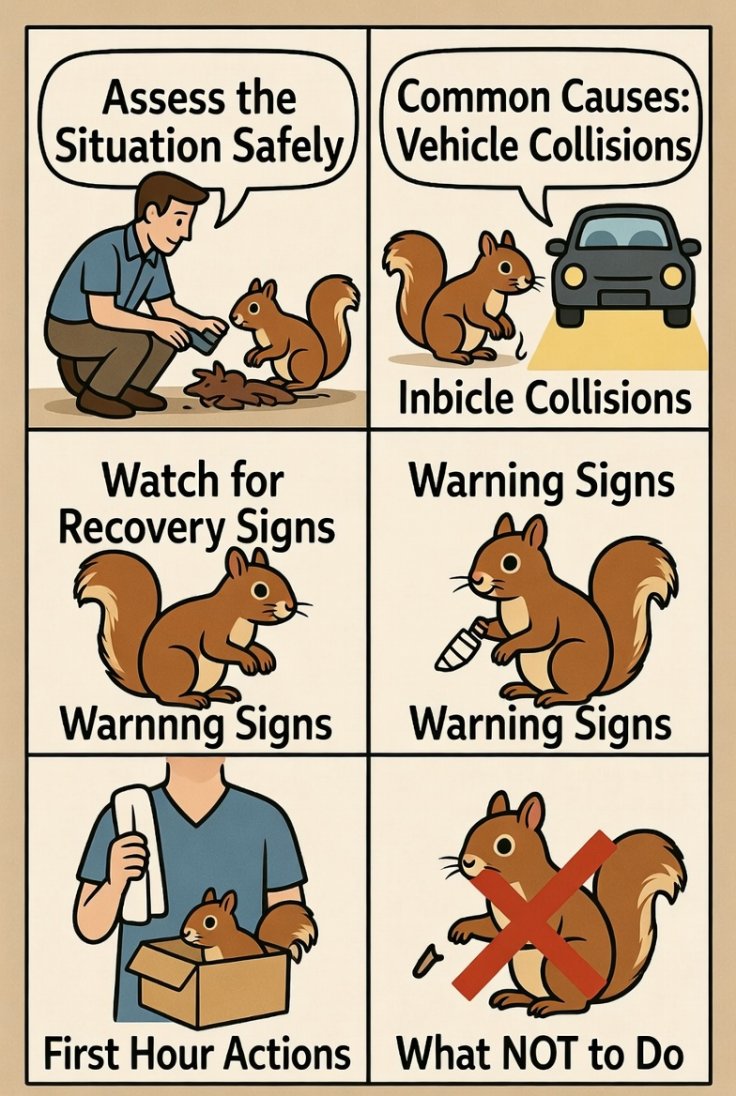
The first hour after finding an injured squirrel is about stabilization, not treatment or recovery. Your goal is to reduce stress and prevent further harm. Place the squirrel in a ventilated cardboard box lined with soft cloth or paper towels. Keep the box closed and dark to limit stimulation.
Provide gentle warmth by placing a warm water bottle or heat source wrapped in cloth next to the squirrel, not directly underneath or on top of it. Heat should be subtle and consistent. Overheating can be just as dangerous as being too cold.
Once the squirrel is contained, leave it alone. Constant checking, handling, or repositioning increases stress and uses energy the squirrel cannot afford to lose. Do not feed or give water during this stage. Cold or injured squirrels cannot digest properly, and premature feeding often causes fatal complications.
What should you not do with an injured squirrel?
Some actions that feel helpful can cause more harm than the injury itself. Do not give cow's milk, bread, biscuits, fruits, nuts, or any household food. These foods can cause digestive failure, aspiration, or bloating.
Do not drip water into the squirrel's mouth or attempt to syringe feed liquids. This often leads to inhalation of fluid into the lungs. Do not bathe the squirrel or attempt to clean wounds aggressively. Do not allow children or pets to interact with the squirrel.
Do not attempt to splint limbs, apply medications, or treat wounds at home. Most rescue failures stem from feeding too early, forced hydration, or excessive handling driven by good intentions.
How should you set up short-term care for an injured squirrel?
Short term care means hours, not days or weeks. The environment should be quiet, warm, and free from activity. Place the box in a low traffic room away from televisions, pets, and people.
Maintain warmth consistently and change bedding only if it becomes wet or soiled. Avoid unnecessary handling. Soft talking nearby is acceptable, but touching should be minimal.
Your role during short term care is not to heal the squirrel. It is to keep the situation stable until professional guidance or transfer becomes possible.
What are the feeding risks for an injured squirrel?
Feeding is often delayed much longer than people expect, and this is intentional. An injured squirrel must be warm, alert, and responsive before feeding is even considered. Baby squirrels require species specific formula, and adult squirrels often do not need food immediately at all.
Incorrect feeding can cause aspiration, bloating, diarrhea, or complete digestive shutdown. These complications often appear hours later and are difficult to reverse.
Waiting to feed is safer than guessing. Feeding too early is one of the most common causes of death in rescued squirrels.
What hydration mistakes are common with an injured squirrel?
Hydration is one of the most misunderstood aspects of wildlife rescue. People assume dehydration is the biggest immediate threat, but aspiration is far more dangerous. A squirrel that inhales even a small amount of liquid can develop fatal pneumonia quickly.
Hydration should only be attempted when swallowing reflexes are clearly intact. It should be done slowly and ideally under professional guidance.
Never force fluids into an injured squirrel's mouth. If in doubt, do not hydrate yet.
When is professional help necessary for an injured squirrel?
Professional help is necessary if the injured squirrel is a baby, has visible injuries, shows neurological symptoms, was attacked by a pet, or does not improve after several hours of warmth and quiet. Wildlife rehabilitators have access to antibiotics, pain relief, proper diets, and treatment protocols that cannot be replicated at home.
Early transfer dramatically improves survival chances. Delaying professional care often reduces options and outcomes.
Reaching out for help is not failure. It is part of responsible rescue.
What time, cost, and commitment are involved?
Even short term care requires emotional focus, time, and attention. Long term rehabilitation involves frequent feeding, specialized enclosures, and careful release preparation. Most people are not equipped for this level of care, and that is normal.
Financial costs may include transport, supplies, or veterinary care. Emotional costs are often underestimated.
Knowing when to step back is responsible, not selfish.
What is the emotional impact of helping an injured squirrel?
Helping an injured squirrel often feels heavier than people expect. Attachment can form quickly, especially when caring for a vulnerable animal. People replay decisions and blame themselves when outcomes are not ideal.
Not every rescue succeeds, even with perfect care. Wildlife injuries are unpredictable, and survival is never guaranteed.
Care still matters, even when the outcome is not what you hoped for.
What special or uncommon injured squirrel situations exist?
Some squirrels recover rapidly from shock and appear normal within hours. Others decline later due to internal injuries that were not immediately obvious. Sometimes mothers return for babies if given the chance.
Reunification may be possible in certain situations, especially with uninjured babies. Observation and flexibility are essential.
Each case is different, and rigid assumptions often lead to mistakes.
What are the long-term outcomes for an injured squirrel?
The best outcome is rehabilitation followed by release back into the wild. A middle outcome involves transfer to licensed long term care when release is not possible. The hardest outcome is humane euthanasia to prevent suffering.
The goal is always welfare, not saving at all costs.
What ethical responsibility do you have when rescuing an injured squirrel?
Wild squirrels are not pets, even when they appear calm or bonded. Keeping an injured squirrel too long can damage its ability to survive independently.
Emotional attachment does not equal ethical care. Sometimes the kindest decision is also the most difficult one.
Responsible rescue prioritizes the animal's long term well being over human comfort.
Frequently Asked Questions
FAQ 1: How do I know if I should rescue a squirrel or leave it alone?
Adult squirrels that can move, even awkwardly, are often best observed from a distance unless they are in immediate danger. Shock can make them freeze temporarily. Baby squirrels that are hairless, cold, weak, or crying continuously need help. When unsure, keep the squirrel safe nearby and seek guidance before removing it completely.
FAQ 2: Can I give the squirrel water, milk, or sugar water to help it recover?
No. Injured or cold squirrels often cannot swallow properly, and liquids can enter the lungs and cause pneumonia or sudden death. Milk causes digestive failure, and sugar water can worsen shock. Warmth and quiet come first. Hydration comes later, carefully and with guidance.
FAQ 3: What if a cat or dog attacked the squirrel?
This is always an emergency. Cat saliva contains bacteria that can kill squirrels even when wounds look minor. Do not wait or attempt home treatment. Contain the squirrel, keep it warm, and seek professional help immediately.
FAQ 4: Is it okay to keep the squirrel at home until it heals?
Short term containment while arranging help is usually acceptable. Long term care without training is rarely good for the animal and may be illegal. Squirrels that become too comfortable with humans often do not survive after release.
FAQ 5: How long does recovery usually take?
Shock cases may resolve within a day. Injuries can take weeks or months. Baby squirrels require constant care for weeks before independence. Release timing is critical.
FAQ 6: I already made a mistake and fed milk or handled too much. What should I do now?
Stop feeding immediately. Reduce handling. Keep the squirrel warm and quiet. Seek professional help and be honest about what happened. Early correction often improves outcomes.
If you are reading this late at night, worried and unsure, remember this. The best help you can give is calm restraint. Stabilize the squirrel, avoid experimentation, and bring in help early. That is how injured squirrels get a real second chance.


