Nearly half of Japanese companies operating in Vietnam have experienced increasing difficulty in recruiting workers over the past two years, with labour shortages in the manufacturing sector in northern Vietnam becoming particularly severe, according to a new survey by the Japan External Trade Organization (Jetro).
The findings come from Jetro's annual survey on the business conditions of Japanese companies investing overseas for the fiscal year 2025, the 38th edition covering Asia and Oceania. Conducted between August 19 and September 17, 2025, the survey received responses from 5,109 companies out of 12,900 contacted.
Despite recruitment challenges, business sentiment among Japanese firms in Vietnam remains broadly positive. About 67.5% of respondents said they expect to be profitable in 2025; the highest level recorded since 2009.
This also marked the first time in five years that Vietnam outperformed the ASEAN average of 65.3%. Looking ahead, 47.6% of companies forecast improved business performance in 2026 compared with 2025, although more than 30% of firms in the transport equipment and auto parts sectors anticipated a deterioration.
Vietnam continued to rank first in ASEAN as the most attractive destination for business expansion. Some 56.9% of Japanese companies said they plan to expand operations in the next one to two years, up 0.8 percentage points from the previous year. Firms cited rising exports, strengthening domestic demand and plans to enhance sales functions as key drivers of expansion.
At the same time, the proportion of companies planning to scale back operations in Vietnam rose to 4.2%, an increase of 1.4 points year on year. A smaller group, 0.7%, said they were considering relocating to a third country. Concerns over additional United States tariffs were also highlighted, with 33.8% of firms exporting to the US expecting negative impacts, even as many said they were seeking ways to maintain export volumes.
The survey showed a continued shift towards local sourcing. Local procurement accounted for 38.1% of total sourcing, up 1.5 points from a year earlier. Procurement from Vietnamese suppliers reached a record high of 18.3%, while companies said they aim to raise local sourcing to nearly half of total procurement in the longer term.
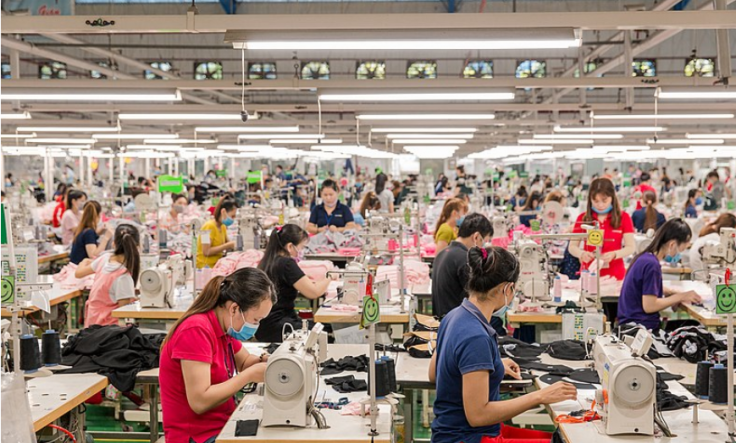
However, labour availability has emerged as a major constraint. About 48.2% of respondents said recruitment had become more difficult over the past two years, with manufacturing firms in northern Vietnam facing the most acute shortages amid competition from Chinese, South Korean and Taiwanese companies.
While Japanese firms rated Vietnam highly for its growth potential, relatively low labour costs and political and social stability, they flagged concerns over administrative procedures and the legal framework. Industry experts said labour shortages pose a growing risk to manufacturing, widely regarded as the backbone of Vietnam's economy and a key contributor to GDP growth, exports and foreign direct investment.
Experts noted that the issue is not a lack of workers overall, but a mismatch in labour structure and quality. Companies reported difficulty in hiring skilled machinists, technicians, automation specialists and experienced managers. Shortages were most evident among mid-level technical workers, engineers capable of operating in high-tech environments, and factory managers familiar with modern governance and international standards.
A representative of a foreign-invested manufacturer in Bac Ninh province said that while a factory can be built within a year, developing a qualified team of engineers and supervisors typically takes three to five years. Domestic firms, especially small and medium-sized enterprises, face even greater challenges due to weaker branding and compensation, often forcing them to remain in low-value-added segments.
Industry observers warned that without timely solutions to improve workforce quality and skills, labour shortages could become a major obstacle to Vietnam's industrialisation ambitions and long-term sustainable growth.


