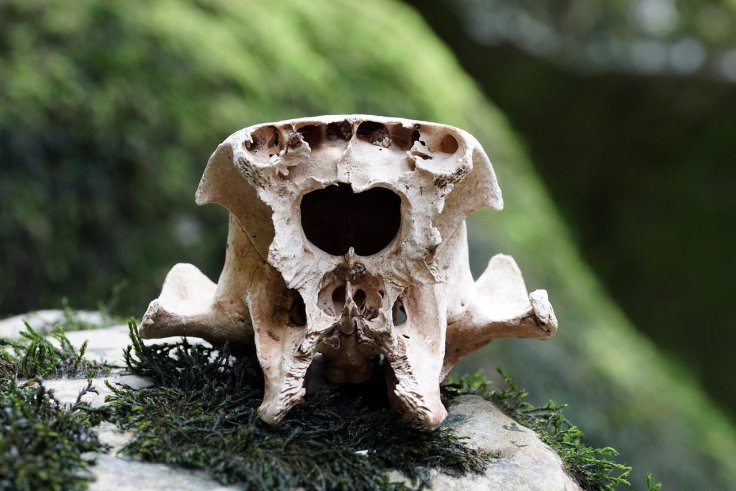
Fossilised bones and teeth dating back around 773,000 years, discovered in a cave in Morocco, are offering new insights into the early stages of human evolution in Africa and the emergence of Homo sapiens.
Researchers say the remains likely belonged to archaic humans who may have been close ancestors of modern humans.
The fossils were uncovered in a cave known as Grotte à Hominidés in the city of Casablanca. They include lower jawbones from two adults and a toddler, as well as teeth, a thigh bone and several vertebrae. Evidence suggests the cave was once used as a den by predators. Bite marks found on the thigh bone indicate that the individual may have been hunted or scavenged by a hyena.
According to the research team, the most plausible interpretation is that the fossils represent an evolved form of Homo erectus, an archaic human species that first appeared in Africa about 1.9 million years ago before spreading into Eurasia.
The bones and teeth display a combination of primitive and more modern features, helping to bridge a significant gap in the African fossil record between about one million and 600,000 years ago.
The researchers said the fossils may belong to an African population that existed shortly before the evolutionary divergence that gave rise to Homo sapiens in Africa and two closely related hominin groups in Eurasia — the Neanderthals and Denisovans.
"I would be cautious about labeling them as 'the last common ancestor,' but they are plausibly close to the populations from which later African - Homo sapiens - and Eurasian - Neanderthal and Denisovan - lineages ultimately emerged," said paleoanthropologist Jean-Jacques Hublin of the Collège de France in Paris and the Max Planck Institute for Evolutionary Anthropology in Germany, the lead author of the study published on Wednesday, January 7, in the journal Nature.
"The fossils show a mosaic of primitive and derived traits, consistent with evolutionary differentiation already underway during this period, while reinforcing a deep African ancestry for the Homo sapiens lineage," Hublin added.
Morocco has previously yielded some of the earliest known Homo sapiens fossils. Remains dating to about 315,000 years ago were found at the Jebel Irhoud site, also underscoring North Africa's importance in understanding human origins.
Determining the age of the Grotte à Hominidés fossils was crucial to placing them within the human family tree. The age was established using the magnetic signature of sediments surrounding the remains.
"Establishing the age was essential to the interpretation of this material," Hublin said.
Over time, the fossils were buried by fine sediments, and the cave entrance was sealed by a sand dune, creating conditions that allowed for exceptional preservation. Archaeologists also uncovered hundreds of stone tools and thousands of animal bones at the site.
The Moroccan fossils are roughly the same age as remains found at Gran Dolina near Atapuerca in Spain, which are attributed to an archaic species known as Homo antecessor. Some anatomical similarities have been identified between the two sets of fossils.
"The similarities between Gran Dolina and Grotte à Hominidés are intriguing and may reflect intermittent connections across the Strait of Gibraltar, a hypothesis that deserves further investigation," Hublin said.
Hominins from this period are thought to have had body proportions similar to modern humans but smaller brains. The jawbone of the Grotte à Hominidés child, estimated to be about one-and-a-half years old, was complete, while one adult mandible was nearly intact and the other only partially preserved. Differences in robustness between the adult jawbones suggest they may have belonged to a man and a woman. The largest fossil recovered was the adult femur.
The findings also highlight the dangers faced by early humans living in predator-rich environments.
"Only the femur displays clear evidence of carnivore modification - gnawing and tooth marks - indicating consumption by a large carnivore. However, the cave appears primarily to have been a carnivore den that hominins used only occasionally. The absence of tooth marks on the mandibles does not imply that other parts of the bodies were not consumed by hyenas or other carnivores," Hublin said.


