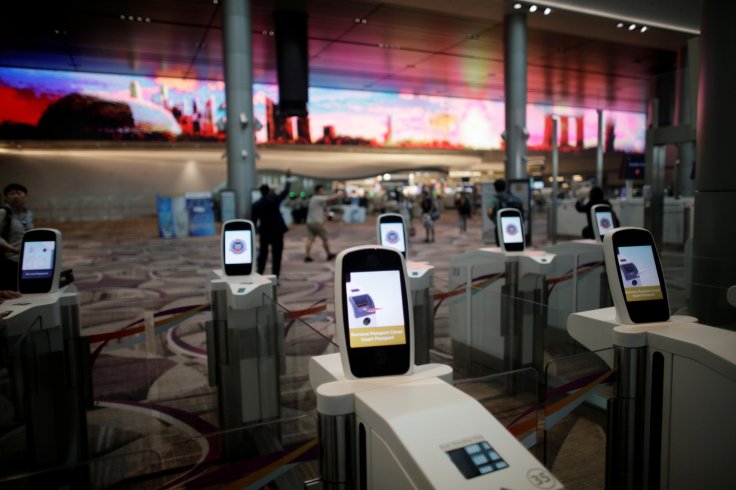
Singapore will step up its border controls from January 2026 with the rollout of a new no-boarding directive (NBD) initiative, aimed at preventing high-risk and undesirable travellers from even boarding flights bound for the Republic.
The move comes as around 41,800 foreigners were refused entry at Singapore's checkpoints in the first 11 months of 2025, according to the Immigration and Checkpoints Authority (ICA).
The figure marks a sharp rise, with the number of travellers turned away between January and November 2025 nearly 26% higher than the whole of 2024, and 46% more than in 2023.
From January 2026, several airlines — including Singapore Airlines, Scoot, Emirates, Turkish Airlines and AirAsia — will implement the NBD, barring passengers from boarding if they are found to be ineligible for entry into Singapore. More airlines are expected to join the initiative from March 2026, ICA said.
The new scheme shifts part of Singapore's border enforcement upstream, stopping prohibited travellers before they arrive. ICA said many recent refusals were already made possible through advancements in its new clearance concept, which features multiple layers of security.
These include automated immigration lanes equipped with counter-forgery detection, as well as multi-modal biometric screening systems that can identify travellers attempting to impersonate others or use multiple identities.
Deputy Assistant Commissioner Joe Tan, who is also deputy director of ICA's operations division, said the authority also relies on advance passenger information and data analytics to flag travellers of concern before they reach Singapore. Such travellers are subjected to more stringent checks upon arrival, rather than being automatically denied entry.
"We do not deny travellers entry simply because they are identified to be high-risk upstream," said DAC Tan. "They are stopped at our automated lanes for further interviews and investigations to determine their intentions and eligibility."
Under the NBD initiative, airlines will receive boarding instructions after passenger details are screened through ICA's systems. This will allow operators to issue no-boarding directives to travellers confirmed to be ineligible for entry. Currently, airlines conduct checks manually, a process ICA said is prone to human error and does not allow operators to verify visa validity or submission of arrival card details.
"When such travellers check in for a flight to Singapore, the airline will stop them from boarding," DAC Tan said, stressing that NBDs will only be issued when ICA is fully certain a traveller is prohibited from entering the country. Those affected can still seek ICA's approval before arranging a new flight.
Singapore's approach mirrors similar systems already in place overseas. In the United States, the Secure Flight programme screens passengers against a terrorism watch list, while Australia uses its Movement Alert List to flag people of interest, including those with serious criminal records or visa restrictions.
On the ground, ICA officers continue to play a critical role. Sergeant 3 Muhammad Yusri Karim, an assessment and investigation officer at the Airport Command, said the introduction of passport-less clearance at automated lanes has significantly eased the workload.
"Previously, we had only a few seconds to profile a traveller while managing long queues," he said. "With iris and facial biometric scanning, we can clear a large volume of passengers more securely and efficiently."
While NBDs will mainly apply to air and sea checkpoints, ICA stressed that land checkpoints will not be compromised. Foreign travellers entering by land will still be required to submit arrival cards, allowing advance screening to take place.
"The purpose of NBDs is to deny undesirable travellers from boarding flights into Singapore," DAC Tan said. "It does not weaken our ability to stop them, regardless of how they try to enter the country."


