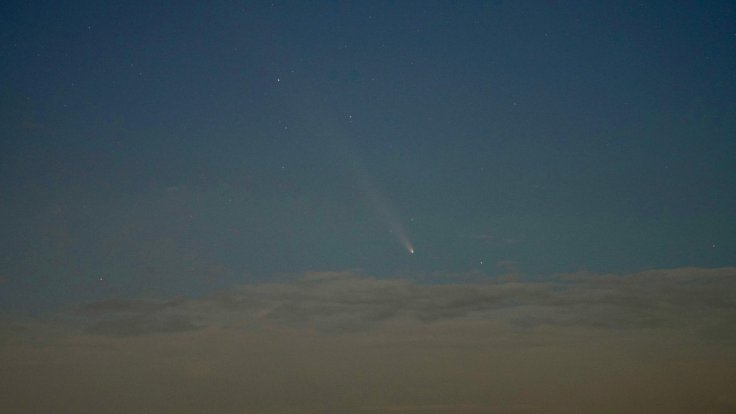
For two nights next week, shooting stars will streak across the Singapore sky, providing a stunning celestial show for ardent stargazers.
The Observatory at Science Centre Singapore said in a statement on Tuesday, October 14, that the shooting stars, or more precisely, a meteor shower known as Orionid, will reach their peak activity in Singapore skies between October 21 and October 22.
One of the most spectacular meteor shower displays that can be seen with the naked eye is thought to be the Orionids, so named because the meteors seem to emerge from a spot near the constellation Orion the Hunter.
The observatory said, "The Orionids occur when Earth passes through debris left behind by Halley's Comet."
"As these fragments enter Earth's atmosphere, they burn up in brilliant bursts of light that can last just a few seconds, creating the stunning meteor shower."
The best time to see the meteor showers is between midnight and dawn, and they happen every year from October 2 to November 7. According to the observatory, they typically reach their zenith after two in the morning, when the Orion constellation is higher in the sky.
Observers of the meteor showers can anticipate seeing 10 to 20 Orionids per hour, with the possibility of seeing bright fireballs from swiftly traveling meteors.
The meteor showers will be visible throughout the sky and don't require any special equipment to view.
According to the observatory, visibility of the meteor showers can also be impacted by Singapore's light pollution and frequent cloud cover.
Therefore, for the best viewing experience, it is best to go to open, dark places like parks, beaches, reservoirs, or fields that are not illuminated by city lights.
The observatory stated that meteors are fragments of rock that enter the Earth's atmosphere so quickly that they heat up and emit a luminous light when they burn.
"These appear as quick streaks of light moving across the sky, often lasting only a few seconds. People commonly call them shooting stars," it added.
It stated that although it will not host any special viewing events for the meteor showers, the public will still be able to view stars and planets through telescopes during its regular stargazing sessions on certain Fridays.


