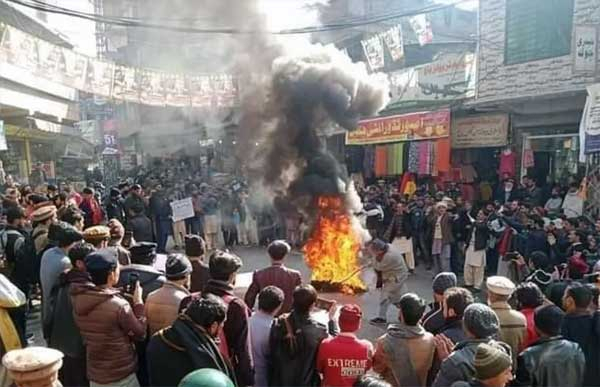
The recent wave of protests in Pakistan-occupied Jammu & Kashmir (PoJK) has once again thrown a harsh spotlight on the heavy-handed tactics of the Pakistani state. What began as a peaceful movement demanding fair electricity prices, healthcare, and education has quickly turned into a tragedy marked by civilian deaths, mass injuries, and allegations of state-sponsored violence.
Reports from Muzaffarabad, Dhirkot, Dadyal, and Kotli tell a chilling story: when citizens poured into the streets to demand rights, they were met with bullets. At least a dozen civilians have been killed and hundreds injured in clashes with Pakistani security forces. The protests, led by the Joint Awami Action Committee (JAAC), have shaken the region and exposed how Islamabad treats PoJK not as a self-governing territory but as a colony to be policed.
Locals describe the crackdown as part of a long pattern of state oppression. Each time people in PoJK raise their voices, the Pakistani establishment responds with force instead of dialogue. "The so-called 'Azad Kashmir' is anything but free," said JAAC leader Shaukat Nawaz Mir. "Our voices are crushed, our youth are jailed, and when we march peacefully, we are fired upon."
Mahmood Kashmiri, Chairman of Jammu Kashmir National Independence Alliance (JKNIA), UK says, "...The situation in PoJK right now is very scary. Armed forces sent there by Pakistan have surrounded the entire region; there is a heavy presence of security forces at the entry point...In Muzaffarabad, with the help of the Police, the goons of Muslim Conference killed two youths. Several others are injured... I would like to ask the Pakistan Govt what game they intend to play here? Can you crush people with the help of arms? Can you stifle the voice of the public by killing people? No... We demand that the forces sent inside PoJK by Pakistan be recalled... Muslim Conference leader Sardar Atiq should be arrested because two youth were killed due to him, and several others were injured... We will raise our voice against this..."
This cycle of repression is not new. From quelling student protests to muzzling civil society, Islamabad has often relied on its security apparatus to stifle dissent in PoJK. But this time, with video evidence of police firing and eyewitness accounts circulating online, the brutality has become impossible to ignore.
Killing their own citizens
What makes the killings in PoJK particularly stark is the contradiction they reveal. Pakistan has long projected itself as the global defender of Kashmiris, raising the issue of human rights in Jammu & Kashmir at international forums. Yet, when Kashmiris under its own control demand basic services, the state does not hesitate to use deadly force against them.
Activists argue that the response exposes the Pakistani government's priorities. "This is not about protecting the people. It is about protecting an elite-driven system that thrives on keeping PoJK politically weak and economically dependent," said a human rights campaigner from the region.
Alongside the violence, reports indicate a growing climate of intimidation. Families of protesters say they fear late-night raids, arbitrary arrests, and surveillance. Several JAAC leaders have been detained, while others remain in hiding. Internet blackouts across key towns further isolate communities and prevent information from reaching the outside world.
For many residents, the message is clear: resistance will be met not with reforms, but with bullets. A shopkeeper in Kotli, who lost a relative in the clashes, said: "We only asked for fair treatment. The answer we got was death."
Even as casualties rise, Pakistan's establishment continues to blame "external forces" for the turmoil. The Inter-Services Public Relations (ISPR) has often described such unrest as "foreign-backed," echoing its narrative in Balochistan and against the Tehreek-e-Taliban Pakistan (TTP). But in PoJK, the protesters' demands — better infrastructure, an end to corruption, affordable electricity — clearly reflect domestic grievances rather than outside meddling.
Analysts argue that this narrative of external blame allows the Pakistani state to absolve itself of responsibility while justifying a militarized response. "It is easier to call people agents of India than to admit the government is failing them," said a political observer in Islamabad.
A Breaking Point?
As the death toll mounts, the people of PoJK find themselves at a breaking point. Protesters insist their demands are non-negotiable, while the government signals it will not tolerate further demonstrations. This deadlock raises fears of more bloodshed in the days ahead.


