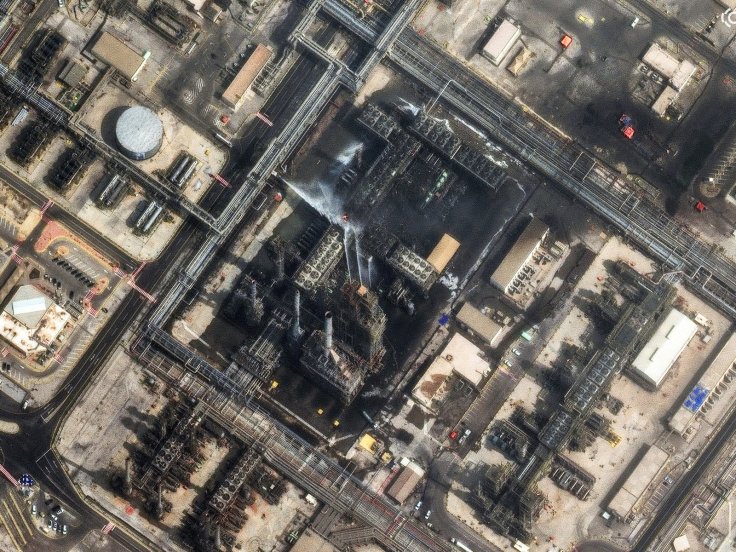
- Planet Labs, Vantor restricted satellite imagery access across Middle East conflict zones.
- Companies delayed release of new high-resolution images up to two weeks.
- Firms said restrictions aim to prevent targeting of military sites.
- Measures implemented voluntarily without government directive.
During the war between Iran and the Middle East, the satellite companies have limited access to images in the satellites.
Two large United States based satellite intelligence firms have placed new limitation to the accessibility of satellite visions of portions of the Middle East as the conflict between the United States, Israel and Iran clashes due to warned that the images might be utilized to target military goals.
Spatial intelligence companies Planet Labs and Vantor, which offer high-resolution satellite images of the area to governments, businesses, and media organizations, affirmed that they had restricted access to some of the imagery of the area. The companies indicated the limitations were made on voluntary basis and not directive by any government.
California-based Planet Labs, which is managing over 200 satellites in space, warned its clients earlier this week that it had increased restrictions to imagery of Iran and adjacent regions. The action involves postponing the access of freshly caught pictures of a larger zone that has now included Iran and Gulf countries and other military bases.
The firm claimed that the precautionary measure was required such that its satellite data is not misused in a manner that would help during the ongoing conflict with its enemies.
Increased Satellite Data Limitations.
In a text messaged to visitors, Planet labs indicated that it was now targeting an extra territory in interest to the area of Iran as well as neighboring ally bases alongside the Gulf states and already existing war zones. The firm has also imposed a two-week deferment on the accessibility to new pictures of these regions in its trade record.
The new measures are based on limitations that were implemented previously last week. The company at that time announced it would not release images captured over the Gulf states, Iraq, Kuwait and other warring regions until four days later when it would permit accessibility of the same through its commercial outlets.
Planet Labs stated that that increased delay was taken following consultations with experts within and outside the government. Nonetheless, the company emphasized that the choice was independent.
One of the spokespersons of Planet Labs stated that the alteration did not come as a command or suggestion of any government but made the choice as an in-house responsibility in risk management of the enterprise.
The limitations are meant to guard against the possible use of high-resolution satellite images to determine sensitive military locations or infrastructures that can become targets in real-time.
The satellite imagery has become vital in providing information in contemporary wars that provide almost real-time visual verification of troop movements, destruction of infrastructure and military action.
Vantor Imposes Correspondent controls.
Another U.S.-based spatial intelligence firm (also known as Vantor) which offers satellite imagery services and has been awarded federal contracts verified that it has applied the same access restrictions to portions of the Middle East.
The company claimed that the action is in line with its current policies of handling sensitive geospatial information in times of geopolitical confrontation.
As part of a geopolitical conflict, Vantor can provide stricter access settings to guard the misuse of the sensitive and geospatial intelligence so that the allied forces and civilians can be safeguarded, said Tomi Maxted, part of the company.
These controls could include assembling controls protection on the users who should have access to new satellite imagery, or buying past imagery of excavating regions where the U.S., NATO or allied forces are engaged (Vantor). The restriction can also be made to areas that are still being targeted by military efforts.
Maxted indicated that the company decides on how and when to affect such measures under its business operation independently. He followed up by saying that such decisions are not imposed by a government, military organization, and third party. When posed on the restrictions, the Pentagon refused to comment on the actions of the companies.
The use of satellite images has increasingly become a part of recording the battles waged by military forces and their imagery has been in most cases provided to governments, academics and the media. Commercial satellite images have often been utilized to verify destruction of infrastructure, military bases and non-military targets in warfare.
Ever since tension between Iran and the rest of the world has intensified, satellites took by Planet Labs and Vantor have been referenced in the coverage by large sources, such as The Washington Post. Such pictures have demonstrated destruction in quite a number of places such as a girls school in the southern city of Iran Minab and a U.S. naval base in Bahrain and the Ali Al Salem Air Base in Kuwait.
This has been the case with previous conflicts as Planet Labs already had similar policies in the past. In 2023, the company postponed publishing the high resolution pictures in Gaza in the war between Israel and Hamas.

In the same breath, Vantor confirmed that it would still survive the restrictions imposed on some of its commercial clients and yet still make available to journalists satellite shots of Iran and the rest of the Middle East using their News Bureau program. Notwithstanding, the company observed that it does not release images of where and whereabouts of U.S, NATO or allied military forces.
In recent years, the commercial satellite imagery has gained so much use owing to the development of new technologies that have enhanced the quantity of satellites that can define clear pictures of the surface of the earth. It is through such data that governments, private corporations, and media houses have become very dependent in tracking what is happening in areas where access is restricted.
Planet Labs and Vantor confirmed that their existing limitations would be short term and reviewed as security conditions in the region change.
The move by privately owned satellite corporations to restrict access to imagery underscores how commercial geospatial intelligence is becoming more central in contemporary warfare with real-time visual data potentially impacting the operations of the armed forces and the perception of events on the ground amongst the populace.